PeriodIndex

17th-century brasses

17th-century brasses

17th-century brasses (c. 1601–1700) are rare survivals of a declining tradition. When produced, they are typically simpler and more textual than earlier examples, reflecting Protestant restraint and changing attitudes toward imagery and commemoration.
17th-century tombs

17th-century tombs

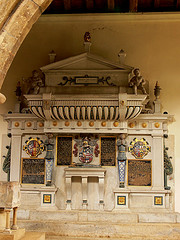
17th-century tombs (c. 1600–1700) favor architectural display over effigial realism. Classical forms, heraldic panels, and kneeling or reclining figures emphasize lineage, authority, and memory within a restrained Protestant framework.

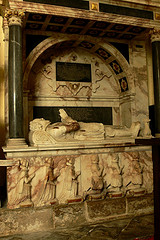
Richard Edes - Worcester Cathedral

Richard Edes - Worcester Cathedral

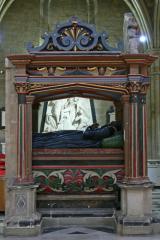
This freestanding monument to Richard Eedes (1604), dean of Worcester cathedral, consists of a large canopied sarcophagus with a recumbent effigy.


Robert Wylde and Wife Tomb - Worcester Cathedral

Robert Wylde and Wife Tomb - Worcester Cathedral

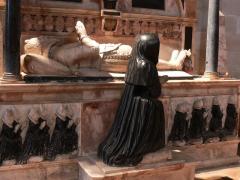
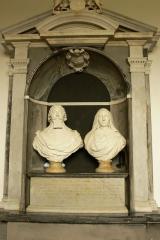
This tomb of Robert Wylde (d1607) and wife Margaret, is in the south aisle of Worcester Cathedral. In consists of two effigies laying on mats with their heads on cushions. Both are wearing black and dressed in a late Elizabethan style with ruff collars.


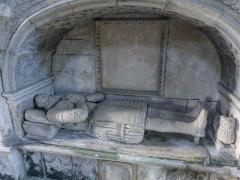
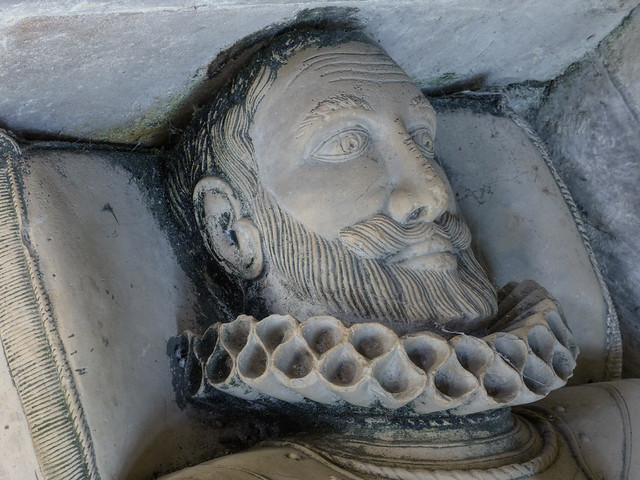
Fulk Woodhul effigy - Thenford Northamptonshire

Fulk Woodhul effigy - Thenford Northamptonshire

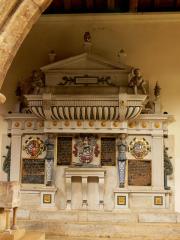
This recumbent effigy, commemorating Fulk Woodhul, dates from the early seventeenth century and is located in the church at Thenford, Northamptonshire. The monument presents the deceased lying full-length within an arched recess, a format that continued medieval funerary traditions while adapting them to post-Reformation sensibilities.

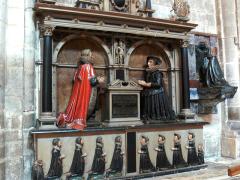
Thomas Machen family monument - Gloucester Cathedral.

Thomas Machen family monument - Gloucester Cathedral.

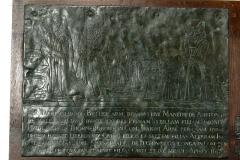
This monument widely attributed to Samuel Baldwin of Stroud, is dedicated to Thomas Machen (d1614), Christian Baston his wife and 13 children. Thomas Machen was mayor of Gloucester three times, and was elected to parliament in 1613.


Elizabeth Williams - Gloucester Cathedral

Elizabeth Williams - Gloucester Cathedral

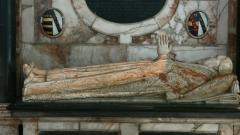
This monument is to Elizabeth Williams (d1622) who died in childbirth, an effigy of a baby in its chrisom shroud lies by her side. Her sister also died in childbirth a year later and a monument to her is nearby. Both monuments are probably the work of Samuel Baldwin of Stroud .


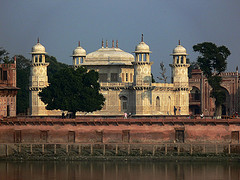
Itimad-ud-Daulah, Agra

Built between 1622 and 1628, Itimad-ud-Daulah in Agra is the tomb of Mirza Ghiyas Beg and his wife Asmat Begum. Mirza Ghiyas Beg had been given the title I'timād-ud-Daulah (pillar of the state) by Akbar the Great, he became Prime Minister of the Empire under Jahangir.

Pages