Roux, Roulland Le
Roulland Le Roux(active c. 1480–1520) was a French sculptor and architect working primarily in Rouen and Normandy during the late fifteenth and early sixteenth centuries. He is one of the key figures in the transition from late Gothic (Flamboyant) sculpture to the early French Renaissance in northern France.
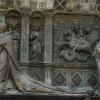
Le Roux operated within the powerful Norman workshop tradition centred on Rouen Cathedral, where sculptural, architectural, and ornamental production were closely integrated. His work is characterised by highly refined stone carving, complex architectural settings, and an emphasis on surface detail, reflecting the enduring vitality of Flamboyant Gothic forms.
At the same time, Le Roux’s sculpture shows an increasing awareness of Renaissance principles, including greater structural clarity, controlled proportions, and a growing interest in classical motifs. These elements are absorbed gradually rather than replacing Gothic conventions outright, resulting in a hybrid visual language typical of early Renaissance Normandy.
Le Roux’s importance lies not in radical stylistic innovation, but in his role as a transmitter of new forms within a conservative regional tradition. His work illustrates how Renaissance ideas entered French sculpture unevenly, filtered through local practices and institutional frameworks rather than imposed wholesale.