
Stained glass
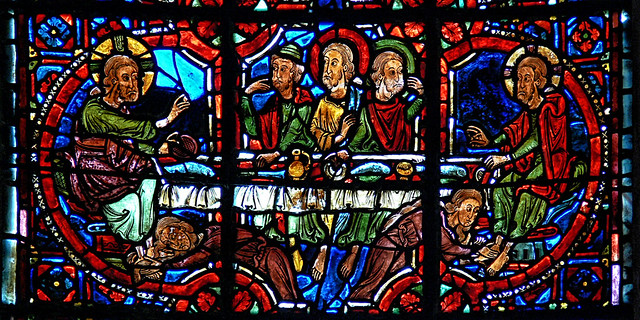
The study of stained glass in architectural and historical context
This section documents stained glass in relation to the buildings, spaces, and historical contexts in which it was made, installed, altered, and preserved.
Many of the sites represented, cathedrals, abbeys, and parish churches in Britain and Europe, contain glass from multiple periods, often reflecting centuries of loss, restoration, replacement, and renewal. Medieval windows may survive alongside Renaissance additions, Victorian revival glass, and modern commissions, each responding to different artistic, devotional, and historical circumstances.
Entries are therefore organised in relation to specific sites, while recognising that the stained glass at any one location may span several distinct phases. Individual windows, narrative cycles, and iconographic programmes are treated as discrete objects where appropriate, and are cross-referenced to related works, patrons, workshops, and historical events.
The section also includes displaced and fragmentary glass, where original architectural settings have been lost, as well as works by later designers and studios whose output is distributed across many sites.
Taken together, this approach allows stained glass to be studied both as an architectural art and as a body of individual works, preserving the complexity of its historical transmission while supporting close visual and comparative study.


