Royley workshop, Richard & Gabriel
The Royley workshop of Burton-upon-Trent, associated with Richard Royley and Gabriel Royley, was active from the late sixteenth into the early seventeenth century and formed part of the long-established English tradition of alabaster monument production.
Burton-upon-Trent emerged in this period as a major centre of alabaster carving, and by the end of the sixteenth century its craftsmen had largely supplanted the earlier Nottingham workshops that had dominated English alabaster production in the later Middle Ages. The Royleys are among the most frequently named makers associated with this Midlands industry.
References in antiquarian and architectural literature, including Pevsner, commonly attribute monuments either to “Richard & Gabriel Royley” jointly or more generally to “alabaster craftsmen of Burton-upon-Trent ⓘ”, reflecting the collaborative and workshop-based nature of production. Individual authorship is rarely distinguishable, and surviving documentation does not allow secure separation of works between Richard and Gabriel.
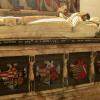
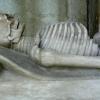
Monuments associated with the Royley workshop typically employ established alabaster formats, with recumbent or kneeling effigies, architectural framing, heraldic display, and restrained figural carving. Their work represents the continuation and adaptation of late medieval alabaster traditions into the Elizabethan and Jacobean periods.
The Royley name should therefore be understood as denoting a workshop identity rather than a single artistic hand, operating within a regional industrial context that supplied monuments across the Midlands and beyond.