
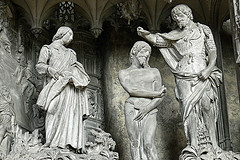
 Above the choir screen at Chartres Cathedral are some 40 sculpted reliefs of biblical scenes, and other scenes from the life of the Virgin Mary. The scenes were sculpted by some of the best artists in France and were commissioned at different times over a 200 year period from 1510 to 1720.
Renaissance

The Sacred Heart Chapel in Beauvais Cathedral contains this stained glass window by Engrand le Prince. It was commissioned in 1522 by Louis de Roncherolles chamberlain and councillor to Francis I of France.
 Monuments or memorials to children in English churches were extremely rare until the late 18th and early 19th century. In the 16th century one can find the occassional child tomb amongst the aristocracy, such as that of the The Noble Impe at St Mary's Warwick, but otherwise children rarely appear to have warranted memorials in their own right.
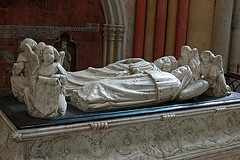
The Tomb of the Children of France is a traditionally attributed to Michel Colombe (c. 1430–1515), one of the foremost French sculptors of the late Gothic and early Renaissance periods, and is widely regarded as one of Michel Colombe’s most touching and refined works.
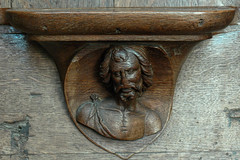 The choir stalls of the collegiate church of Saint-Jean-Baptiste at Montrésor form one of the most eloquent ensembles of Renaissance woodcarving in Touraine. They were made around 1530-1540, when Imbert de Batarnay, seigneur of Montrésor and counsellor to four French kings, endowed the new collegiate foundation he had created in 1521.

This images of Christ Carrying the Cross is in cell 28 of the San Marco convent.

These wall paintings of Christ in Majesty represent Christ as ruler of the universe. Normally he is in a mandorla and surrounded by other figures and objects. The other figures depicted change from time to time.
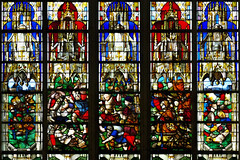
This window is a composite assembly combining fragments of sixteenth-century stained glass with nineteenth-century architectural structures and extensive twentieth-century restoration. The present arrangement consists of five tall lancets surmounted by a unified canopy system reconstructed in 1852, with bases and pedestals also installed at that time.

This fresco by Fra Angelico 1438-1443) depicting the Coronation of the Virgin is in cell 9 of the San Marco monastery in Florence.
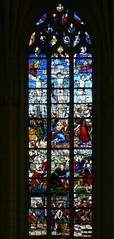
The Crucifixion window in the Church of Saint John the Baptist at Montrésor, in the Indre-et-Loire region of France, is one of the finest surviving examples of early sixteenth-century stained glass in the Loire Valley. Filling a tall Gothic lancet divided into several vertical lights, it unfolds as a vivid narrative of the Passion of Christ, rendered in rich Renaissance color and form.
Pages
