19th century

Preedy, Frederick

Active: c. 1850–1898
Preedy, Frederick

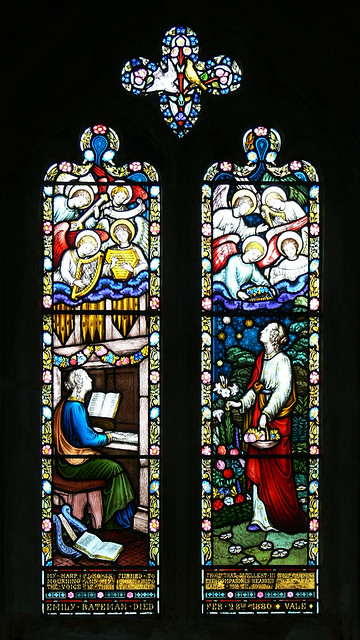
Frederick Preedy (1820–1898) was an English architect and stained-glass designer active during the mid nineteenth century. Trained as an architect in Worcester, he belonged to the generation shaped by the Gothic Revival and the principles promoted by the Ecclesiological movement. Unlike most of his contemporaries, Preedy not only designed stained glass but also manufactured it himself, operating as an independent practitioner rather than through a large commercial studio.

Quire Clerestory Windows - Gloucester Cathedral

Quire Clerestory Windows - Gloucester Cathedral

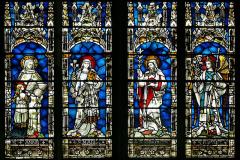
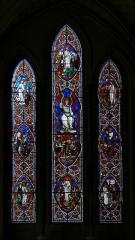
These stained glass windows in the clerestory of Quire at Gloucester Cathedral were made by Clayton and Bell in the early second half of the 19th century. The original medieval clerestory glass had been transferred to fill in damaged panels in other windows in the cathedral notably the great east window and the window in the Lady Chapel.

Resurrection - Gloucester Cathedral

Resurrection - Gloucester Cathedral

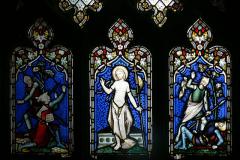
This Hardman window from the mid 1860s depicts the resurrection. Christ rises from the tomb with the soldiers on guard recoiling on either side.


Resurrection Cycle - Warmington, Warwickshire

Resurrection Cycle - Warmington, Warwickshire

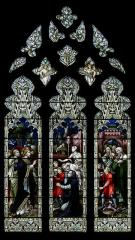
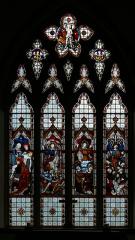
This four light window by Clayton and Bell, can be found at St Michael's church Warmington, Warwickshire. The four scenes show the descent from the cross; the Resurrection; the Ascension; and the Descent of the holy spirit. In the tracery St Michael is shown defeating the dragon.


Richard Colt Hoare

Richard Colt Hoare

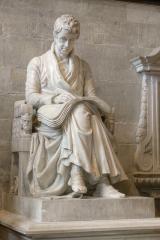
This sculpted monument commemorates Sir Richard Colt Hoare (d1818) and is located in Salisbury Cathedral. It was carved by the sculptor Richard Cockle Lucas , one of the most distinctive British sculptors of the early nineteenth century.

Hoare is shown seated, absorbed in the act of reading and writing. A large open manuscript rests across his knees, presenting him not as a figure of rank or authority but as an active scholar. His contemporary dress is rendered with close attention to texture and fall, reinforcing the sense of immediacy and naturalism.

Pages

Subscribe to 19th century