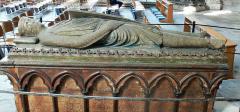
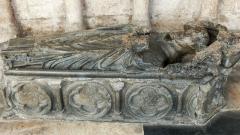
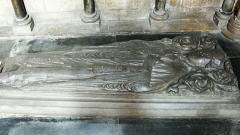
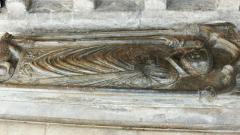
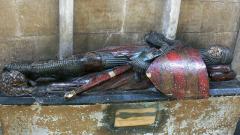
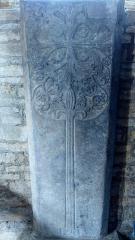
In the 13th century (c. 1200–1300), church monuments were effigial tombs, cross slabs, and early brasses, emerging as Gothic art replaced Romanesque. They focused on piety, feudal status, and intercession, with stiff, symbolic figures.
Index of Medieval all
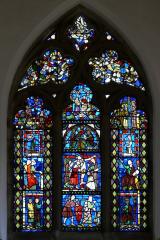
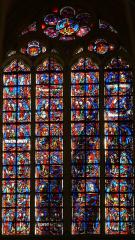
Window w.206 forms part of the major early 13th-century glazing programme of the choir clerestory at Bourges Cathedral. Like the other apostolic lancets in this zone, it presents three full-length apostles standing beneath architectural canopies, each framed by the characteristic red–blue geometric borders of the Bourges workshop. The style, palette, and facial types align closely with the glazing campaigns dated to c.1210–1215.
Window 204 consists of two tall lancets forming part of the celebrated early thirteenth-century clerestory glazing of Bourges Cathedral. The saints represented, Andrew on the left and John the Evangelist on the right, are shown as full-height standing figures beneath architectural canopies, framed by the characteristic geometric borders of the Bourges workshop.
Window w.212, located high in the south choir clerestory of Bourges Cathedral, dates from c.1210–1215 and belongs to the earliest glazing phase of the High Gothic choir. The window presents two Evangelists, Mark and Luke, and one Apostle, Matthias.
This trio forms part of a wider apostolic–evangelist cycle distributed around the clerestory, each figure shown as a monumental standing saint set within a richly patterned Gothic frame.
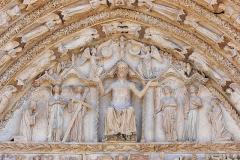
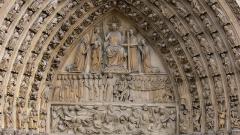
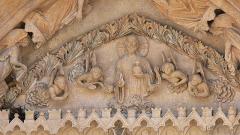
This portal of the Virgin, at Notre Dame Paris, was sculpted between 1210 and 1220. The main scene show the Coronation of the Virgin, where Mary is being crowned Queen of heaven by an angel, whilst she sits on the same throne as Jesus. In the lintel below is Mary on her death bed surrounded by Jesus and the twelve aposles, two angels are about to lift her to heaven. In the lower lintel the old testament prophets are holding scrolls prophesying Christ.