England
William de Roos - Bottesford Leicestershire.
Tomb of William de Roos (d1414), 6th Baron Ros, 6th Baron Roos, Bottesford Leicestershire.
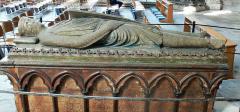
William Longespee Tomb - Salisbury Cathedral
Tomb of William Longespee (d1226) Earl of Salisbury. William Longespee was the illegitimate son of Henry II and half brother to King Richard I and King John of England ⓘ.
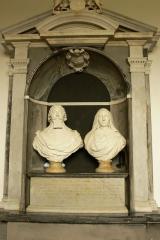
William Peyto Monument - Chesterton, Warwickshire.
Monument by Nicholas Stone ⓘ to William Peyto (d1619) and his wife Eleanor.
William Thorpe and Wife Brass - Higham Ferrers, Northamptonshire
Monumental brass dedicated to William Thorpe (d1504) and his wife Marion. Two figures 2ft 1in in height, with scrolls and inscription.
William Wylde and Wife - Dodford Northamptonshire
This brass monument to William Wylde (d1422) and wife can be found in the church of St Mary, Dodford, Northamptonshire.
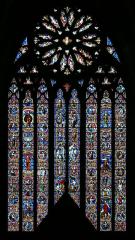
Worcester Cathedral
The earliest stained glass window installed by Hardman, in Worcester Cathedral, is the three light Ressurection window installed in the north aisle in 1861. This eight light west window, however, is one of Hardman's larger works in the UK. Designed by George Gillbert Scott, it was installed in 1875, and depicts the creation.
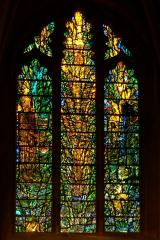
Work and Prayer - Tewkesbury Abbey
Work and Prayer by Tom Denny. St Catherine & St John ⓘ Chapel Tewkesbury Abbey.
Works of Mercy - Kings Sutton, Northamptonshire
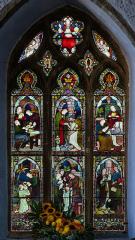
This three-light stained glass window, dated 1877 and designed by Frederick Preedy, illustrates the Works of Mercy as set out in Matthew 25, presenting Christian charity as the visible expression of faith in daily life. The window forms a moral and devotional counterpart to the Passion and sacramental imagery elsewhere in the church.
“Sweet Psalmist of Israel” - Stamford Lincolnshire
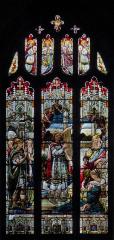
This three-light stained-glass window, installed in the 1880s at St Mary’s Church, Stamford, depicts David as the “Sweet Psalmist of Israel”, a title drawn from 2 Samuel ⓘ 23:1. The style and architectural treatment align with the later phase of the workshop founded by Michael O'Connor and continued after his death.
In the central light, David stands playing the harp, his figure poised beneath an elaborate Gothic canopy. He is presented not as warrior but as inspired musician, the author of the Psalms, embodying sacred poetry and spiritual consolation.