Stained glass
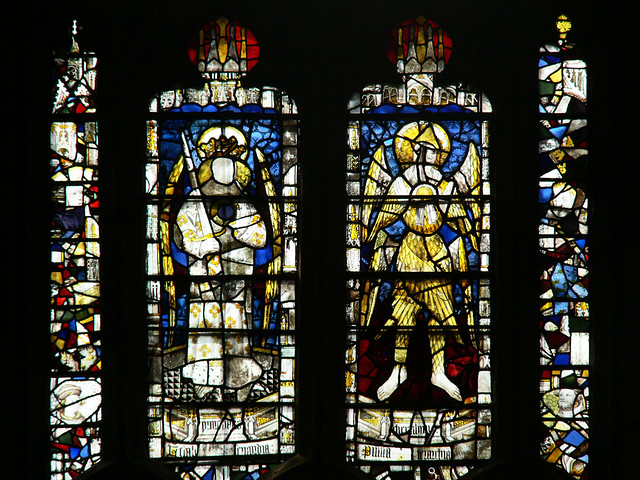
The stained glass of Great Malvern Priory survives in unusually varied condition and represents several distinct phases of glazing activity spanning the fifteenth century to the present day. Together, these windows form a layered visual record of patronage, devotion, restoration, and renewal within a single ecclesiastical site.
The most substantial body of surviving medieval glass dates from the fifteenth century. Major windows remain largely intact, including the Magnificat Window, the Founder’s Window, and the glazing of the Lady Chapel, while other parts of the medieval glazing programme survive only in fragmentary form, most notably the former great east window. These works reflect both high-status aristocratic patronage and the activity of workshops operating at regional and national levels during the later Middle Ages.
→ Medieval stained glass
During the nineteenth century the priory was the subject of significant restoration campaigns, accompanied by the introduction of new stained glass by leading Victorian firms. Windows by Kempe and Clayton & Bell ⓘ were installed within the medieval fabric, reflecting contemporary interest in Gothic revival aesthetics and the reinterpretation of medieval models.
In the late twentieth century the stained glass of the priory was further extended through the installation of the Millennium Windows designed by Tom Denny. This modern commission responds directly to the scale, light, and iconographic traditions of the medieval church, forming a contemporary counterpart to the historic glazing.
→ Millennium Windows (Tom Denny)
Taken together, the stained glass at Great Malvern Priory illustrates both continuity and change: medieval narrative and devotional programmes, Victorian restoration and reinterpretation, and modern artistic engagement with a historic sacred space.