PeriodIndex

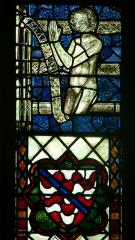
St. Thomas


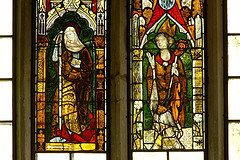
Part of a lost sequence known as the 'History of the Resurrection' this image of doubting Thomas is probably mid 14th century. It was discovered in 1846, in the north transept of Saint Albans Cathedral beneath whitewash.


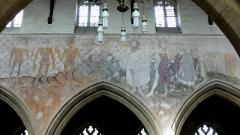
Doom - Lutterworth, Leicestershire


This 14th century "Last Judgement" painting is above the chancel arch of the church where John Wycliffe was the vicar in Lutterworth Leicestershire.

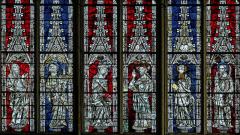
Gloucester Cathedral - East Window

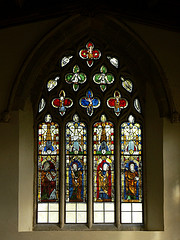
The east window at Gloucester Cathedral was created as part of the rebuilding of the abbey church of St Peter. Built in the Perpendicular style it was the largest window in Europe. The decorative scheme portrays the Coronation of the Virgin and the glass mostly dates from the 1350s.

Wall paintings at Ashby St. Ledgers

The parish church of the Blessed Virgin Mary and Saint Leodegarius at Ashby St Ledgers in Northamptonshire has a C14 - C15 Passion sequence painted above the chancel arch and on the side walls. The sequence was uncovered during restoration work in 1927 and is the most extensive cycle in the UK. The paintings are of a similar date to those at Burton Dassett about 20 miles away.

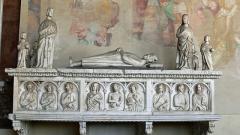
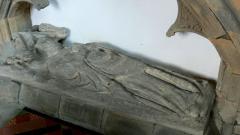
Scholastica de Gayton - Gayton Northamptonshire

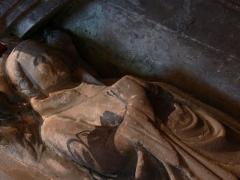
Scholastica de Gayton, who died in 1354, was a member of the medieval de Gayton family, long associated with the village of Gayton in Northamptonshire. She was the daughter of Sir Philip de Gayton, who died in 1316 and whose own effigy also survives in the church of St Mary the Virgin at Gayton.

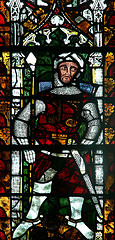
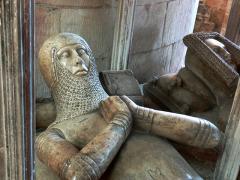
Richard Pembridge - Hereford Cathedral

Sir Richard Pembridge (d1375) was one of the earliest Knights of the Garter, being elected following the death of Thomas Ufford in 1368. He was present at all of Edward III's major victories during the Hundred Years War: Sluys (1340), Creçy (1346), the Siege of Calais (1347), and Poiters (1356) where he fought alongside the Black Prince.


Dancing Angels: Donatello’s Renaissance Spiritelli

Seated Spritello by Donatello

Donatello’s spiritelli—small bronze, dancing child figures—embody the Renaissance fusion of classical vitality and Christian joy. Created for settings from pulpits to private collections, these lively winged children transformed ancient putti into symbols of divine life and humanist celebration. Through their movement, naturalism, and charm, Donatello redefined sculpture as a living expression of sacred and worldly beauty.

Pages