
Angel Corbels of the Nave - All Saints Stamford, Lincolnshire
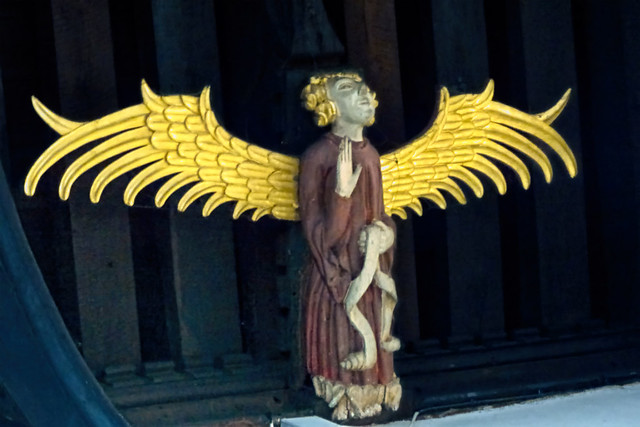
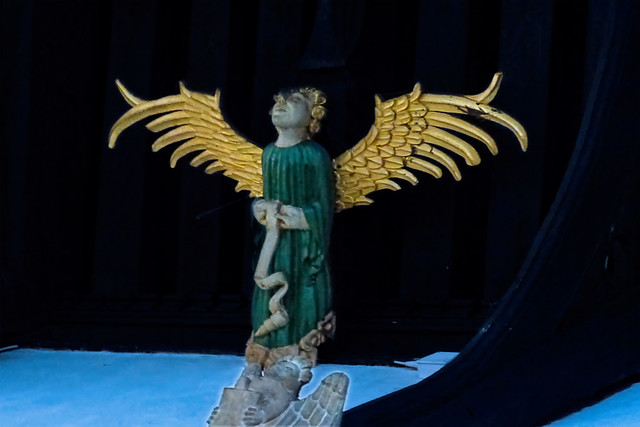
The timber roofs of the nave, chancel, and south-east chapel at All Saints date from the major late fifteenth-century rebuilding of the church, undertaken from c. 1470 onwards under the patronage of the wealthy wool merchants John and William Browne. This campaign transformed the clerestory ⓘ, aisles, tower, and spire, and included the construction of richly carved angel roofs.
These angels, carved in oak, form an integral part of the timber structure. Positioned at the ends of beams or hammer-beams, they appear to support the roof visually while functioning primarily as devotional ornament.
Description
The angels are:
-
Carved in high relief
-
Winged, often with broad, outstretched wings
-
Originally polychromed and gilded
-
Haloed
-
Clad in flowing late-medieval drapery
Many are shown in prayerful attitude, hands joined or uplifted, gazing heavenward. The wings frequently retain traces of gilding, which would have caught candlelight dramatically in the late medieval interior.
Decorative bosses, also carved and gilded, enrich the roof intersections, contributing to the celestial symbolism of the ensemble.
Stylistic Context
The carving belongs to the Perpendicular Gothic tradition of the later 15th century. Angel roofs became a distinctive feature of prosperous parish churches in the East Midlands and East Anglia during this period, particularly in communities enriched by the wool trade.
The Stamford angels display:
-
Crisp feather carving
-
Expressive but idealised faces
-
Strongly defined drapery folds
-
Balanced proportions suited to elevated viewing
Their placement reinforces the theological conception of the church interior as a foretaste of the heavenly court, with angels literally “supporting” the sacred space.
