17th century church monuments
/info/section/church-monument-art-17th-century-church-monuments/john-needham-tomb-litchborough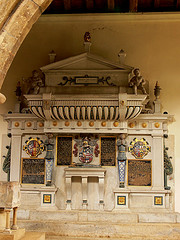
Church brasses, tomb chests, effigies, and sculpture from 1600 - 1700AD.
/info/section/church-monument-art-17th-century-church-monuments/john-needham-tomb-litchborough
Church brasses, tomb chests, effigies, and sculpture from 1600 - 1700AD.
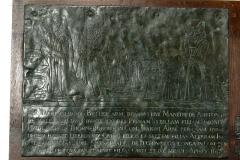
17th-century brasses (c. 1601–1700) are rare survivals of a declining tradition. When produced, they are typically simpler and more textual than earlier examples, reflecting Protestant restraint and changing attitudes toward imagery and commemoration.
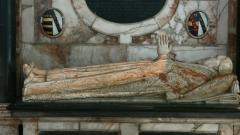
17th-century tombs (c. 1600–1700) favor architectural display over effigial realism. Classical forms, heraldic panels, and kneeling or reclining figures emphasize lineage, authority, and memory within a restrained Protestant framework.
17th-century wall monuments (c. 1601–1700) become the dominant form of commemoration. Tablets, cartouches, and architectural frames combine inscription, heraldry, and classical ornament to assert identity, genealogy, and moral reputation.
Monument to Abigail Goldsborough (d1613). Worcester cathedral.
Alban Butler (d1609) - St. Leonard, Aston le Walls.
This monument is a tomb with elaborate alabaster effigies of Alderman Abraham Blackleech (d1639) and his wife Gertrude.
Bust of Bishop John Gaugen (d1662), Worcester Cathedral. John Gaugen was made Bishop of Worcester in May 1662 but died in September 1662 of "stone and strangury" - a complication of kidney stones.
Recumbent alabaster effigy of Bishop Heton (1609).
Semi reclining effigy of Bishop Peter Gunning (d1684).