Elizabeth Knightley Tomb - Norton, Northamptonshire.

Alabaster memorial to Elizabeth Knightley (d1602). A recumbent effigy with somewhat brightly coloured decoration. All Saints, Norton, Northamptonshire.
Alabaster memorial to Elizabeth Knightley (d1602). A recumbent effigy with somewhat brightly coloured decoration. All Saints, Norton, Northamptonshire.
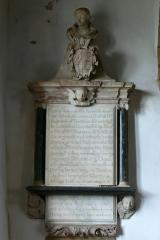
An inscribed wall monument of white marble with black Ionic half-columns, surmounted by a sculpted bust and heraldic cartouche, commemorating Elizabeth Orme, who died on 20 January 1692. The monument combines classical architectural framing with emotive figurative carving, including a cherub’s head beneath the cornice, and belongs firmly to the late 17th-century English commemorative tradition.
Memorial to Elizabeth Verney (d1633).
This monument is to Elizabeth Williams (d1622) who died in childbirth, an effigy of a baby in its chrisom shroud lies by her side. Her sister also died in childbirth a year later and a monument to her is nearby. Both monuments are probably the work of Samuel Baldwin of Stroud ⓘ.

This collection of 17th century Flemish carved wooden panels form the reredos at the church of St Lawrence, Shotteswell in Warwickshire. They come from different periods in the 17th century and consequently are stylistically different.
Giulio Foggini (1652–1725) born Giovanni Battista Foggini, was an Italian sculptor active in Florence during the late Baroque period. He was one of the most accomplished sculptors working in Tuscany at the turn of the eighteenth century, known for his dynamic figural compositions, expressive modelling, and refined handling of marble and bronze.
Memorial brass to Frances Benyon wife of parish minister (d1687).
Thomas Green (died c. 1730) was a leading English sculptor and statuary active in the late seventeenth and early eighteenth centuries. According to Gunnis, he ranks among the outstanding sculptors of the first part of the eighteenth century, with a career encompassing ecclesiastical monuments, architectural statuary, and extensive official and armorial work.
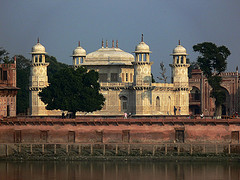 Built between 1622 and 1628, Itimad-ud-Daulah in Agra is the tomb of Mirza Ghiyas Beg and his wife Asmat Begum. Mirza Ghiyas Beg had been given the title I'timād-ud-Daulah (pillar of the state) by Akbar the Great, he became Prime Minister of the Empire under Jahangir.
Wall memorial to Jean de Sachy (d1644) incorporating 'Allegory of Death' by Nicolas Blasset ⓘ.