16th century

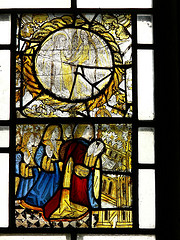
Crucifixion - Montresor, France
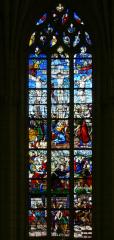
Crucifixion - Montresor, France

The Crucifixion window in the Church of Saint John the Baptist at Montrésor, in the Indre-et-Loire region of France, is one of the finest surviving examples of early sixteenth-century stained glass in the Loire Valley. Filling a tall Gothic lancet divided into several vertical lights, it unfolds as a vivid narrative of the Passion of Christ, rendered in rich Renaissance color and form.

Cure workshop of Southwark

Active: late 16th century – early 17th century

The Cure workshop, based in Southwark, London, was one of the most important producers of elite funerary monuments in England from the late sixteenth into the early seventeenth century. Operated by members of the Cure family, the workshop supplied high-status tombs for aristocratic, courtly, and ecclesiastical patrons during the late Elizabethan and early Jacobean periods.

Decapitation of John the Baptist - Saint Romain-sur-Cher

Decapitation of John the Baptist - Saint Romain-sur-Cher

The church at Saint Romain sur Cher was rebult in the C16 and restored in the C19. The north and south walls of the apse are painted with scenes of the Decapitation of John the Baptist and the Baptism of Christ on the north wall, and on the south wall is the Resurrection. Both of these paintings were restored in 1859.


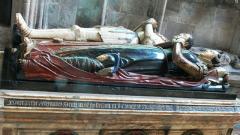
Denton family tomb - Hereford Cathedral

Denton family tomb - Hereford Cathedral

This alabaster monument to Alexander Denton and his wife Anne (nee Willison), dates from about 1566. Anne his wife and the child by her side are the only ones that are buried here.


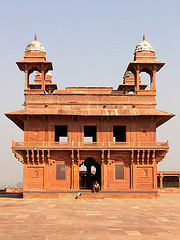
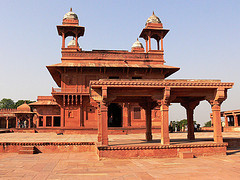
Diwan-i-Khas


Although commonly known as the Diwan-i-Khas (Hall of Private Audience), it is thought to be too small to have fulfilled that purpose, and an alternative suggestion is that it was Akbar the Great's jewel house as the main treasury building is nearby.


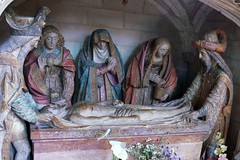
Easter Sepulchre - Neufchâtel-en-Bray, France

Easter SepulchreThis, late 15th–early 16th century, Easter Sepulchre group depicts the moment of Christ’s entombment, a subject traditionally shown in Holy Week rituals in northern France and the Low Countries. The scene is arranged beneath a shallow architectural canopy, gathering together the key figures who, according to the Gospels, prepared Christ’s body for burial.


Engrand Le Prince

Active: late 15th century – early 16th century
Engrand Le Prince

Engrand Le Prince was one of the leading stained-glass painters of early-sixteenth-century France and a central figure in the celebrated Le Prince family of Beauvais. Active during a period of artistic transition, his work stands at the junction between late Gothic glazing traditions and the emerging visual language of the Renaissance.

Fatehpur Sikri

Built in around 1570, by the Mughal Emperor Akbar the Great, Fatehpur Sikri was the new capital of the Mughal Empire and the first planned city of the Mughals.


Pages

Subscribe to 16th century