
Belenois
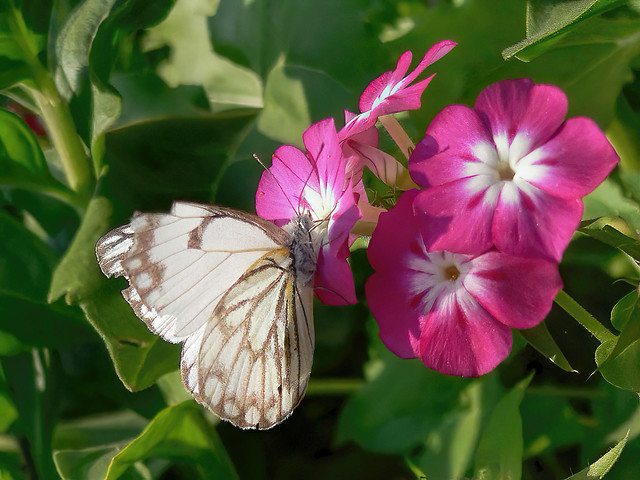
Belenois is a genus of medium-sized butterflies in the family Pieridae, commonly known as the white butterflies. The group is strongly centred in sub-Saharan Africa, where many species are among the most abundant and conspicuous pierids of savannas, open woodlands, and cultivated landscapes. A few members also extend into southwest Asia.
At first glance, Belenois species resemble the familiar European “whites”, but they are typically more strongly patterned. Most have white or cream forewings marked with dark grey or black borders, often forming a network of veins or chequered patches. The hindwings are usually paler and may be suffused with yellow, particularly on the underside. This combination of white, black, and yellow forms a distinctive visual signature of the genus. Although many species appear similar, closer inspection reveals diagnostic differences in the shape of the black apical patch, the presence or absence of submarginal spots, and the exact arrangement of venation patterns.
The genus includes several well-known African species, such as:
-
Belenois aurota (the Pioneer White or Caper White), famous for its long-distance migrations and sudden population explosions linked to seasonal rains;
-
Belenois gidica (African Veined White);
-
Belenois creona (African Common White).
Many Belenois species participate in spectacular mass movements, moving north–south with the rains as they search for larval host plants and fresh vegetation.
Like other pierids, the caterpillars feed predominantly on species of the Capparaceae—especially Capparis and Maerua—plants rich in glucosinolates. The larvae are normally green or yellowish with fine striping, and they hide among the host foliage. Pupation occurs in a slender, exposed chrysalis attached by a silken girdle to stems or leaves.
Adult Belenois are almost always sun-loving, fast-flying insects. They visit flowers readily, often forming mixed feeding assemblies with other pierids. Many species are sexually dimorphic, with females showing more extensive dark patterning. Their behaviour, abundance, and responsiveness to climate make them important ecological indicators in African ecosystems.
