
Holy Roman Emperor Henry V
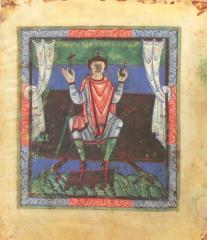
Henry V (1086–1125) was King of the Romans from 1099 and Holy Roman Emperor from 1111 until his death. The son of Henry IV, Holy Roman Emperor ⓘ, he played a decisive role in the later phase of the Investiture Controversy ⓘ and concluded the long conflict between empire and papacy with the Concordat of Worms in 1122.
His reign marked the transition from the turbulent struggles of his father’s era to a negotiated settlement defining the relationship between imperial and ecclesiastical authority.
Early Life and Revolt
Henry was crowned King of the Romans in 1099 while his father still reigned. In 1104 he turned against Henry IV, aligning himself with reform-minded princes and bishops. In 1105 his father was forced to abdicate, and Henry V assumed full royal authority.
He inherited not only the crown but also the unresolved tensions between empire and papacy.
Conflict with the Papacy
Relations with Paschal II deteriorated over the issue of investiture. In 1111 Henry marched on Rome and secured imperial coronation after compelling the pope to concede on episcopal appointments. The agreement quickly collapsed, and hostilities resumed.
The struggle culminated in the Concordat of Worms in 1122, negotiated with Callixtus II. The settlement distinguished between spiritual authority, conferred by the Church, and temporal rights, granted by the emperor. This compromise effectively ended the Investiture Controversy within the empire.
Marriage and Dynastic Politics
In 1114 Henry married Empress Matilda, daughter of Henry I of England. The marriage strengthened Anglo-imperial ties but produced no surviving heirs.
Death and Legacy
Henry V died in 1125 without legitimate offspring. His death marked the end of the Salian dynasty. The imperial crown passed to Lothair III after a contested election.
Henry’s reign is remembered for bringing formal resolution to the Investiture Controversy and for redefining the balance between imperial and papal power.
Succession
Preceded by: Holy Roman Emperor Henry IV