
Henry II of England
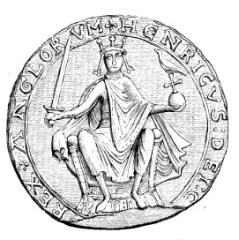
Henry II was King of England from 1154 to 1189 and the founder of what modern historians term the Angevin Empire, a complex of territories stretching from Scotland to the Pyrenees. Through inheritance, marriage, and conquest, Henry ruled England, large parts of western France, and exercised overlordship across the British Isles, making him one of the most powerful rulers of 12th-century Europe.
Royal Government and the Law
One of Henry II’s most enduring achievements was the systematic reorganisation of royal justice. Building on earlier practices, he expanded the reach of the king’s courts, introduced itinerant justices, and regularised legal procedures across the realm. These reforms laid the foundations of what later became known as common law: a body of law administered in the king’s name, based on precedent and uniform procedure rather than local custom alone.
Royal justice under Henry increasingly reached into areas previously governed by feudal or ecclesiastical courts. Assizes such as those of Clarendon (1166) and Northampton (1176) strengthened royal authority over crime, land tenure, and judicial process, binding local communities more tightly to the crown.
The Crown and the Church
Henry’s extension of royal jurisdiction brought him into conflict with the English church, most famously with Thomas Becket ⓘ, Archbishop of Canterbury. At issue was whether clergy accused of serious crimes should be tried exclusively in ecclesiastical courts or also be subject to royal justice. Henry’s attempt to assert royal authority over such cases, articulated in the Constitutions of Clarendon (1164), met determined resistance from Becket.
The dispute escalated into exile, political confrontation, and ultimately Becket’s murder in Canterbury Cathedral in 1170. Although Henry did not order the killing, its consequences profoundly shaped his reign. The episode exposed the limits of royal power when confronted by ecclesiastical authority and forced Henry into public penance, even as the broader structures of royal justice continued to develop.
Family and Rebellion
Henry II’s reign was also marked by persistent conflict within his own family. His marriage to Eleanor of Aquitaine ⓘ produced several sons, among them Henry the Young King, Richard, Geoffrey, and John. Henry’s reluctance to delegate real authority to his heirs contributed to repeated rebellions, often encouraged by Eleanor and supported by rival continental powers.
The great rebellion of 1173–74, involving Henry’s sons and King Louis VII of France ⓘ, nearly unseated the king. Although Henry ultimately prevailed, familial rivalry remained a defining feature of the later years of his reign and shaped the unstable succession that followed his death.
Historical Significance
Henry II’s reign reshaped the English monarchy. His legal reforms strengthened royal authority and created enduring institutions, while his continental possessions tied English history ever more closely to that of France. At the same time, his conflicts with the church and with his own family revealed the tensions inherent in the exercise of medieval kingship. Henry died in 1189, succeeded by his son Richard I, leaving a legacy of both institutional strength and dynastic fragility.
Succession
Preceded by: Stephen of England ; Succeeded by: Richard I of England
Associated Events
- 25 December 1137 — Coronation of Louis VII of France 1137
- 18 May 1152 — Henry II of England Marries Eleanor of Aquitaine 1152
- 23 May 1162 — Thomas Becket becomes Archbishop of Canterbury 1162
- 29 December 1170 — Thomas Becket killed in Canterbury Cathedral 1170
- 12 July 1174 — Henry II Does Penance at Caterbury Cathedral 1174

