Confessors - Chartres Cathedral

In addition to the martyrs, the south porch contains a sequence of images of those that had proclaimed Christian beliefs during periods of suppression (confessors).
In addition to the martyrs, the south porch contains a sequence of images of those that had proclaimed Christian beliefs during periods of suppression (confessors).

The south porch of Chartres Cathedral contains a series of sculptures, that were made between 1194 and 1230, on the subject of the martyrdom of saints.
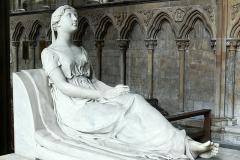
Monument to Charlotte Elizabeth Digby (d1820) by Francis Leggatt Chantrey. Charlotte Digby was the wife of William Digby, prebendary of Worcester Cathedral.

Kingdom: Animalia
Phylum: Arthropoda
Class: Insecta
Order: Coleoptera
Family: Cantharidae
Genus: Cantharis
Species: C. pellucida

The so-called Founders’ Window at Great Malvern Priory is one of the most important narrative glazing schemes to survive in the church. Set high in the north clerestory ⓘ of the chancel, the window is composed of four lights arranged in two registers, presenting a visual history of the foundation of the priory that combines legend, royal authority, and aristocratic patronage.
William de la Corner (d1291) was bishop of Salsibury from 1289 until his death whilst on his second mission abroad as an ambassador for Edward I. This tomb is just 1.1 metres in length and is sometimes described as the tomb of a boy bishop. However, small tombs like this were often built when just the heart of the deceased was buried, in this case it was the bones that were returned to Salisbury.
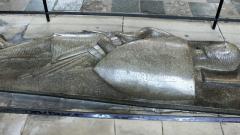
Once thought to be an effigial monument to William Longespee (d1250) the date of the armour places this as a 14th century monument.
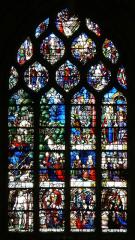
The stained-glass window illustrating the Legend of St Eustace ⓘ (baie n° 18) in Saint-Étienne ⓘ de Beauvais is a composite Renaissance work, produced in successive campaigns between 1553 and c. 1575. Its extended execution reflects a cumulative process of patronage, bringing together multiple donors, artists, and workshops within a single coherent narrative cycle.
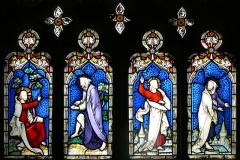
In the east arcade of the cloisters are two windows depicting the temptation of Christ. These windows were made in the 1860s by John Hardman and Co.
Bust of Bishop John Gaugen (d1662), Worcester Cathedral. John Gaugen was made Bishop of Worcester in May 1662 but died in September 1662 of "stone and strangury" - a complication of kidney stones.