Engrand Le Prince
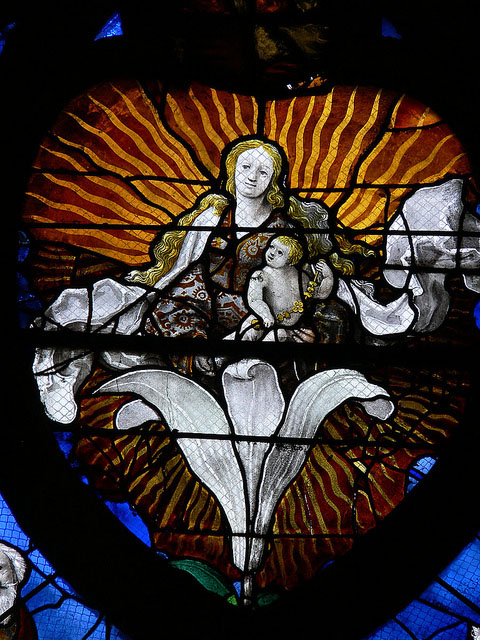
Engrand Le Prince was one of the leading stained-glass painters of early-sixteenth-century France and a central figure in the celebrated Le Prince family of Beauvais. Active during a period of artistic transition, his work stands at the junction between late Gothic glazing traditions and the emerging visual language of the Renaissance.
Beauvais, with its ambitious cathedral project and prosperous ecclesiastical patrons, provided a fertile context for major glazing commissions. Within this environment, Engrand Le Prince established a highly productive workshop whose influence extended across Picardy and into neighbouring regions. Documentary references place him among the foremost practitioners of his generation, and his name became closely associated with the highest quality glass produced in Beauvais during the first decades of the sixteenth century.
Artistic Characteristics
Engrand Le Prince’s stained glass is distinguished by a refined synthesis of medieval structure and Renaissance pictorial ambition:
-
Figures are monumental and dignified, with calm, expressive faces and a pronounced sense of corporeal weight.
-
Drapery is full and plastic, often treated with painterly modulation rather than linear patterning.
-
Spatial composition shows an increasing awareness of architectural perspective and coherent pictorial space.
-
Colour is rich but disciplined, combining deep blues and reds with luminous whites and carefully modelled flesh tones.
-
Narrative clarity remains paramount, ensuring legibility and didactic effectiveness within large ecclesiastical cycles.
These qualities suggest close engagement with contemporary panel painting, as well as the circulation of printed models and drawings within the workshop.
Principal Works
Engrand Le Prince is particularly associated with stained-glass windows in Beauvais Cathedral, where several narrative and devotional panels are attributed to him or his workshop. His style is also recognised in glazing commissions for parish and collegiate churches throughout the Beauvaisis and neighbouring districts.
While precise attributions are sometimes complicated by collaborative workshop practice and later restorations, a consistent visual language links these works and underlines his role as a dominant artistic personality within the regional glass-painting tradition.
Workshop and Influence
As head of a major workshop, Engrand Le Prince played a key role in shaping the next generation of glass painters in northern France. The Le Prince atelier maintained a distinctive house style that was widely imitated and adapted, contributing to the diffusion of Renaissance forms within the medium of stained glass.
His work exemplifies the successful adaptation of Renaissance aesthetics to monumental glazing, preserving the structural logic and luminous qualities of medieval glass while embracing new ideals of form, space, and naturalism.
Significance
Engrand Le Prince is now regarded as one of the most important French stained-glass artists of the early Renaissance. His work occupies a pivotal position in the history of the medium, marking the transition from late Gothic conventions to a fully Renaissance mode of expression within ecclesiastical glazing.