
Arthur James Memorial Window - Churchover Warwickshire
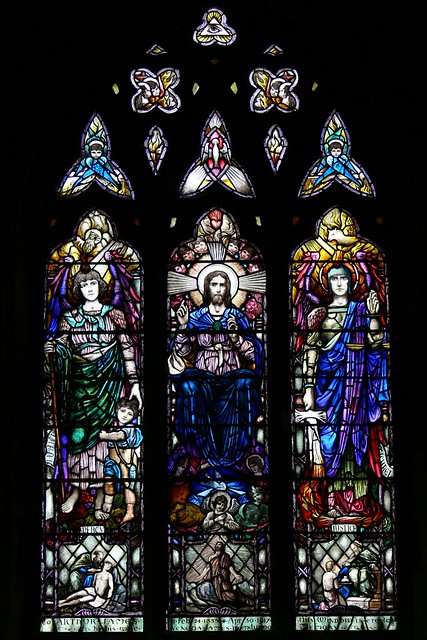
This memorial stained-glass window, executed c. 1918 by Arild Rosenkrantz, commemorates Arthur James (d. 1918) and is installed in the parish church at Churchover, Warwickshire. The date and dedication place the work firmly within the immediate aftermath of the First World War, a context that strongly informs both its iconography and emotional tenor.


The window is arranged as a three-light composition, each principal panel presenting a theological figure associated with guidance, judgement, and redemption. In the left-hand light, the Archangel Raphael is shown accompanying the young Tobias, an image traditionally associated with protection, healing, and safe passage. Raphael’s calm, attentive posture and Tobias’s youthful vulnerability establish a theme of divine guardianship that resonates poignantly within a memorial context.
In the right-hand light, Saint Michael the Archangel appears with scales, the traditional emblem of the weighing of souls ⓘ at the Last Judgement. Michael’s upright stance and steady gaze introduce a note of moral gravity, counterbalancing the gentler imagery of Raphael and reinforcing the eschatological dimension of the memorial.

The central light is dominated by a seated figure of Christ in Majesty, shown frontally with raised hand in blessing. Christ’s monumental stillness and luminous halo provide the theological and visual axis of the composition, anchoring the surrounding narrative scenes. Rosenkrantz’s handling here is characteristically painterly: soft tonal transitions, restrained modelling, and a sensitive balance between line and colour give the figure a solemn yet compassionate presence.
Beneath each of the three principal figures is a smaller subsidiary scene, rendered on a reduced scale and framed within the lower register of each light. These scenes expand upon the themes introduced above: acts of care, divine intervention, and the soul’s passage beyond earthly life. Their intimate scale and narrative clarity invite close contemplation, contrasting with the more hieratic presentation of the upper figures.
Stylistically, the window exemplifies Rosenkrantz’s mature English-period work. His figures show clear affinities with Pre-Raphaelite ideals—particularly in the elongated proportions, expressive faces, and rhythmic drapery—while the palette reveals a subtle modernity, with cool blues, violets, and greens offset by warmer flesh tones and restrained use of gold. The glass painting is economical yet highly expressive, allowing light to animate the figures without sacrificing legibility.
As a war memorial, the Churchover window avoids overt militarism. Instead, Rosenkrantz articulates remembrance through a carefully structured theological narrative, offering consolation through themes of protection, judgement tempered by mercy, and the promise of resurrection. In this way, the window stands as both a personal memorial to Arthur James and a broader reflection of post-war spiritual sensibilities in early 20th-century English stained glass.
