Stephen Langton

Stephen Langton fut archevêque de Cantorbéry de 1207 à 1228 et l’une des figures majeures de la crise politique et ecclésiastique du règne de Jean sans Terre . Malgré l’opposition du roi, Innocent III le consacra archevêque en 1207, après que Jean eut tenté d’imposer son propre candidat, Jean de Gray, évêque de Norwich. L’hostilité royale s’expliquait en partie par les liens étroits de Langton avec la cour de Philippe II Auguste.

William Marshal

William Marshal was an Anglo-Norman knight, magnate, and statesman whose career spanned the reigns of Henry II of England , Richard I of England , John of England , and Henry III of England. Rising from a landless younger son to regent of England, he became one of the most influential figures of the late twelfth and early thirteenth centuries.

Robert Courteheuse

Robert Courteheuse (v.1054–1134), duc de Normandie, était le fils aîné de Guillaume le Conquérant . De caractère instable et souvent en conflit avec son père et ses frères, il hérita de la Normandie en 1087 mais sans disposer des moyens politiques ou financiers nécessaires pour s’imposer durablement.

Vitraux médiévaux

Vitraux médiévaux

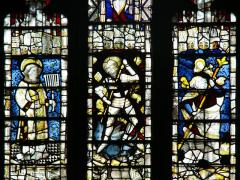
A substantial body of medieval stained glass survives at Great Malvern Priory, although its condition and completeness vary considerably from window to window. Several major fifteenth-century windows remain largely intact, most notably the Magnificat Window, the Founder’s Window, and the glazing of the Lady Chapel. Elsewhere, survival is more fragmentary: the great east window, though once a dominant feature of the church, now survives largely in dispersed panels and fragments rather than as a complete scheme.

Carron, Pierre

Active: 1954–2022
Carron, Pierre


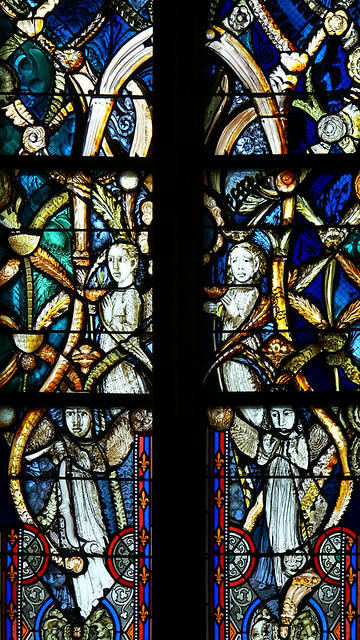
Pierre Carron (1932–2022) was a French painter, sculptor, and stained-glass artist whose work bridges the traditions of classical figurative painting and monumental sacred art. Born in Fécamp, Normandy, he studied at the École régionale des Beaux-Arts in Le Havre and the École nationale supérieure des arts décoratifs in Paris before entering the École des Beaux-Arts in 1951 under Raymond Legueult. Carron quickly established himself as one of France’s most gifted young artists, winning the Prix de la Critique in 1957 and the Grand Prix de Rome in 1960.

Pages

Subscribe to Professor Moriarty RSS