
Adalia
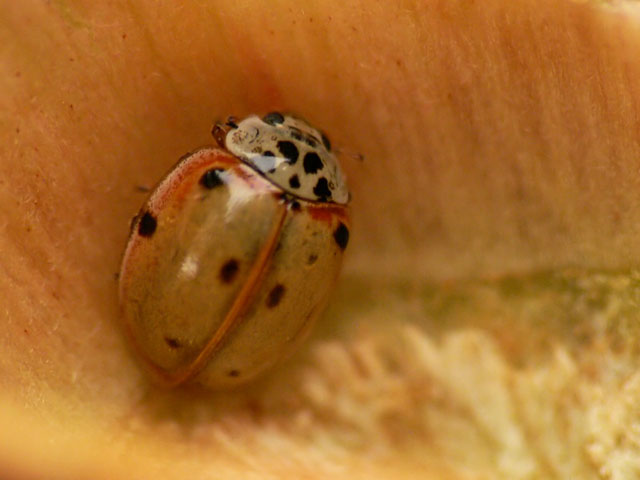
The genus Adalia comprises a small group of familiar ladybird beetles native to Europe and neighbouring regions of the Palearctic. Although modest in species number, the group is well known because two of its members – the Two-spot Ladybird (Adalia bipunctata) and the Ten-spot Ladybird (Adalia decempunctata) – are among the most commonly encountered coccinellids in gardens, orchards, and woodland edges. Species of Adalia are typically small, rounded beetles, usually no more than five millimetres long, with the domed silhouette characteristic of the family. Their colouration is famously variable: the classic red elytra with contrasting black spots occur alongside a wide range of melanic forms, some almost entirely black, others combining red and black in reversed patterns. This polymorphism has made Adalia important in studies of genetic variation, predator–prey interactions, and evolutionary processes.
As with most ladybirds, Adalia species are chiefly predators of aphids and other small soft-bodied insects, and they play a significant role in natural and agricultural biological control. The larvae are elongate, grey-blue with orange markings, and armed with small spines, making them efficient hunters among foliage. Adults are capable of dispersing over long distances and often gather in sheltered sites to overwinter in large numbers. Their adaptability and appetite for aphids have also led to the commercial rearing of Adalia bipunctata, which is widely released in greenhouse crops to reduce pest infestations.
