Boschi, Francesco
Francesco Boschi was a Florentine Baroque painter active in the mid seventeenth century. Though less internationally known than his Roman contemporaries, he played a significant role within Florence’s devotional and decorative culture, contributing to church commissions and chapel programmes during a period of renewed artistic activity in the city.
Born in 1619, Boschi trained under his uncle, Matteo Rosselli. From Rosselli he inherited a disciplined approach to drawing, balanced composition, and a restrained devotional tone that distinguished Florentine painting from the more theatrical Roman Baroque.
Style
Boschi’s work is characterised by:
-
Clear compositional structure
-
Soft modelling of flesh and drapery
-
Harmonious colour
-
Measured emotional expression
Unlike the dramatic chiaroscuro and illusionistic movement favoured in Rome, Boschi retained a clarity and sobriety rooted in Florentine tradition. His figures are graceful and composed, and his sacred scenes emphasise contemplative devotion rather than spectacle.
Major Works
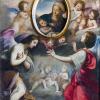
Among his notable works is the Adoration of the Angels (1642–1643) in the church of Santi Michele e Gaetano. Completed shortly after the upper decoration of the chapel by Lorenzo Lippi, the painting shows Boschi’s early style and the continued influence of Rosselli.
He worked primarily in oil on canvas and contributed to Florence’s ecclesiastical interior decoration during the seventeenth century.
Historical Position
Boschi belongs to a generation that sustained Florentine painting after the High Renaissance and before the full impact of later Baroque dynamism. His art reflects continuity rather than rupture. It maintains the city’s long-standing preference for compositional clarity, devotional focus, and refined draftsmanship.