Index of Medieval all

Mabilia de Murdak Tomb - Gayton Northamptonshire
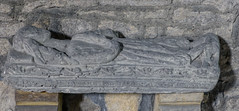
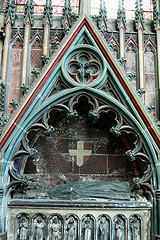
The Tomb of Mabilia de Murdak (also spelled Mabilla or Mabila) is a small 14th-century medieval monument. The tomb is part of a collection of stone memorials in the north chapel (or Gayton Chapel), which includes effigies of local nobility tied to dramatic family events, such as murder and pilgrimage.

St. Margaret of Antioch.

Flagellation of St. Margaret


The flagellation of St. Margaret of Antioch. Ashby St. Ledgers, Northamptonshire.


Medieval Stained glass at Stanford on Avon

St Nicholas parish church in Stanford on Avon, Northamptonshire, contains a large amount of stained glass dating from c1330 - 1540. The early glass contains images of Saints and Bishops, whilst the later glass contains Netherlandish roundels, and images of the Cave family that were the donors.

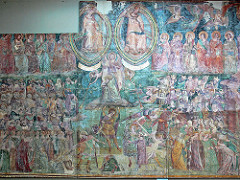
The Last Judgement and Hell - Pisa


Attributed to Buonamico Buffalmacco this depiction of the Last Judgement, in the Camposanto of Pisa, was created between 1345-1340.


Gilbert de Clare, 7th earl of Gloucester


Gilbert de Clare (d1295) was the 7th Earl of Gloucester having succeeded to the Earldom in 1262. Gilbert and his brother Thomas first supported Simon de Montfort's rebellion against Henry III, but later changed sides.


William de Mortimer la Zouche


William de Mortimer la Zouche (d1337) was the second husband of Eleanor de Clare who had these chancel windows made shortly after his death. Eleanor's first husband had been Hugh Despenser the younger, the favourite of Edward II, who was executed at Hereford after Edward II was deposed.


Chancel Windows - Tewkesbury Abbey

The stained glass windows in the chancel of Tewkesbury Abbey are all from between 1338 and 1340. They were most probably a gift to the Abbey by Eleanor Despenser (nee de Clare) the wife of Hugh Despenser the Younger. Eleanor is thought to be the person depicted in the panel here.

Knights of Tewkesbury 2

The south west window in the chancel contains images of four knights who were important descendants of the Abbey's founder Robert Fitzhamon.


The Last Judgement


This medieval window in the chancel of Tewkesbury dates from 1338. The main panels depicts the Last Judgement, and the Coronation of the Virgin is the subject of the rose window.


Robert Fitzhamon


Robert Fitzhamon, also known as fitzHamio, (d1107) was the founder of Tewkesbury Abbey in 1102. He had been given the manor of Tewkesbury as a reward for supporting William II as king of England during the Rebellion of 1088. He also fought alongside Henry I against Henry's brother Robert Curthose. His great granddaughter Isabel of Gloucester became the first wife of John of England.

Gilbert de Clare, 8th earl of Gloucester


Gilbert de Clare, 8th earl of Gloucester, was a strong supporter of Edward II and fought with him at the Battle of Bannockburn on the 24th of June 1314 where he was killed aged 23. He was also one of the Lords ordainers that in 1311 ordered the expulsion of his brother-in-law Piers Gaveston who was Edward's favourite.


Knights of Tewkesbury 1

The north west window in the chancel contains images of four knights who were important descendants of the Abbey's founder Robert Fitzhamon, along with Robert himself.


Hugh Despenser the Younger


Stained glass panel (1338-1340) depicting Hugh Despenser the Younger who was married to Eleanor the sister of Gilbert de Clare. Hugh Despenser became the favourite of Edward II but was especially disliked by Queen Isabella, and executed when Edward II was deposed in 1326.


Gilbert de Clare, 5th earl of Gloucester


Gilbert de Clare, 5th earl of Gloucester, and his father Richard de Clare, were among the 25 barons who pledged to enforce the provisions of the Magna Carta, as a result both were excommunicated by Pope Innocent III.


Pages