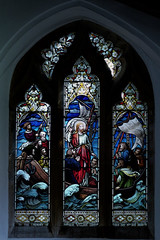
Christ Calming the Sea

Situated in the east window of the south aisle, of the church of St Peter and St Paul, Maidford, Northamptonshire, this stained-glass memorial commemorates Arthur William Grant, who died on 19 December 1878, aged fifty-five. The window was installed circa 1880, by John Hardman & Co. of Birmingham, whose workshop was among the foremost exponents of the Gothic Revival style.
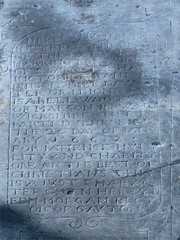
 

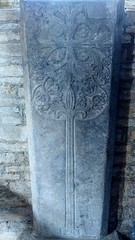
This finely carved coffin lid features a long-stemmed cross whose arms terminate in deeply incised, curling foliage, a design symbolising both the Cross of Christ and the Tree of Life. The leafy ornament, known as a foliated cross, became popular in the 13th century and is often associated with clerical burials or those of prominent parishioners.

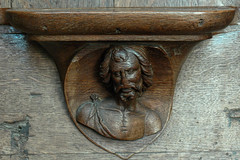
The choir stalls of the collegiate church of Saint-Jean-Baptiste at Montrésor form one of the most eloquent ensembles of Renaissance woodcarving in Touraine. They were made around 1530-1540, when Imbert de Batarnay, seigneur of Montrésor and counsellor to four French kings, endowed the new collegiate foundation he had created in 1521.

In fifteenth-century Florence, the image of the Virgin and Child underwent a quiet revolution. From the solemn, hieratic figures of late Gothic piety, the Madonna became an image of tender humanity, no longer distant and majestic, but immediate, emotional, and profoundly relatable. This transformation mirrors a broader shift in Renaissance devotion: the movement of sacred experience from church to home, from the grandeur of the altar to the intimacy of domestic life.

Swaddled Infant Tondo by Robbia


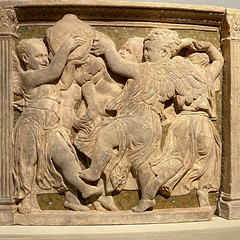
The Ospedale degli Innocenti in Florence stands at the intersection of art, architecture, and social conscience. Commissioned in 1419 by the Arte della Seta (Silk Guild) and designed by Filippo Brunelleschi, it was both a revolutionary architectural achievement and a profoundly humane institution: the first purpose-built orphanage in Europe.

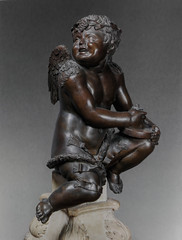
Seated Spritello by Donatello

Donatello’s spiritelli—small bronze, dancing child figures—embody the Renaissance fusion of classical vitality and Christian joy. Created for settings from pulpits to private collections, these lively winged children transformed ancient putti into symbols of divine life and humanist celebration. Through their movement, naturalism, and charm, Donatello redefined sculpture as a living expression of sacred and worldly beauty.

Pages

Subscribe to Professor Moriarty RSS