
The Sower - Radway, Warwickshire
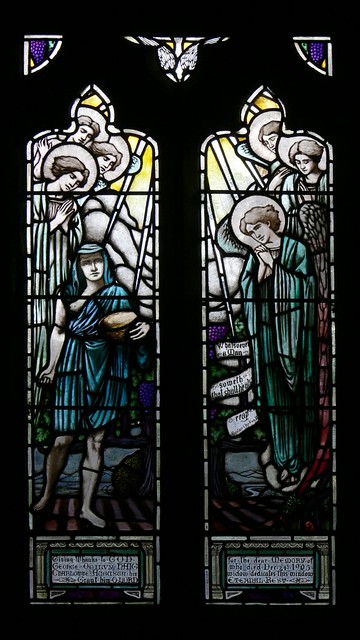
This south aisle window depicts the Parable of the Sower, interpreted with restraint and symbolic clarity by Arild Rosenkrantz, one of the most distinctive figures in early twentieth-century stained glass.
Left-hand light:
The Sower is shown in motion, stepping forward as he scatters seed from a basket held at his side. His bare feet and simple drapery emphasise humility and physical labour, while the rhythmic movement of the figure gives the composition a quiet forward momentum. Above, angels incline towards the scene, forming a vertical axis that links earthly action with divine oversight.
Right-hand light:
A standing angel occupies the companion light, hands folded in contemplation. Scrolls bearing scriptural text refer to the varying fates of the seed, reinforcing the moral and didactic purpose of the parable. The angel’s stillness contrasts with the movement of the Sower, creating a deliberate balance between action and reflection.
Style and technique:
Rosenkrantz’s characteristic handling is evident in the muted palette, dominated by soft greens, greys, and blues, and in the economy of line, which favours broad planes of colour over intricate Gothic patterning. Faces are gently modelled, with subdued expression, contributing to the window’s contemplative tone. Decorative foliage and vine motifs are kept secondary, serving the narrative rather than overwhelming it.
The window exemplifies Rosenkrantz’s departure from Victorian narrative excess towards a more symbolist and meditative approach, influenced by Scandinavian sensibilities and contemporary movements in religious art. Installed in 1905, it represents a moment of transition in English stained glass, where moral teaching is conveyed through simplicity, rhythm, and quiet symbolism rather than architectural display.