
Saint Chad baptising the Saxons - Brixworth, Northamptonshire
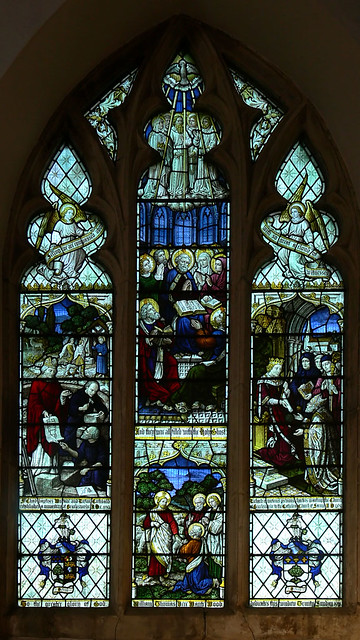
This three-light window presents a historical and theological narrative closely bound to the early and later history of the church at Brixworth, combining Anglo-Saxon foundation legends, royal confirmation, and the central event of Pentecost.
Left-hand light:
The upper scene depicts Saint Chad baptising the Saxons Wulfade and Rufine, affirming the Christianisation of the region. Below, Cuthbald is shown presenting the plans of Bricclesworde to a builder, symbolising the establishment of a monastic foundation c. 680. Together, the scenes assert apostolic continuity from missionary activity to institutional permanence.
Central light:
The upper panel shows the Pentecost, with the Apostles gathered and receiving the tongues of fire, accompanied by the inscription “And they were all filled with the Holy Ghost.” Below, Christ appears to his disciples on the road, reinforcing the theme of revelation and divine guidance that underpins the historical scenes in the flanking lights.
Right-hand light:
Here, secular authority and ecclesiastical continuity are brought together. Richard II is shown confirming earlier charters granting the Church of Bricclesworde to the Cathedral Church of Sarum, dated 1381. The scene legitimises the church’s possessions and status through royal authority, balancing the missionary origins shown on the left.
Tracery lights:
Angels appear above the three main lights, bearing the inscription “Seeing we are compassed about by so great a crowd of witnesses” (Hebrews 12:1), drawing together saints, apostles, founders, and rulers as participants in a continuous sacred history.
The window is characteristic of Burlison & Grylls ⓘ’ early twentieth-century work, combining legible figural storytelling with a restrained palette and clear inscriptions. Installed in 1915, it reflects a renewed interest in local ecclesiastical history, using stained glass to articulate Brixworth’s identity as a site of early Christian foundation, royal patronage, and enduring worship.