Jehan Soulas
Jehan Soulas was a French sculptor active in Tours in the early sixteenth century, working during a period of transition in French sculpture as Renaissance forms were gradually assimilated into late Gothic traditions.
Activity and context
Soulas is documented as working in Tours, a major artistic and ecclesiastical centre of the late fifteenth and early sixteenth centuries. The city’s proximity to the Loire châteaux and its strong connections with royal and ecclesiastical patronage fostered a dense network of workshops producing sculpture, metalwork, and architectural decoration.
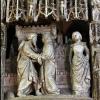
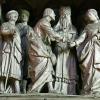
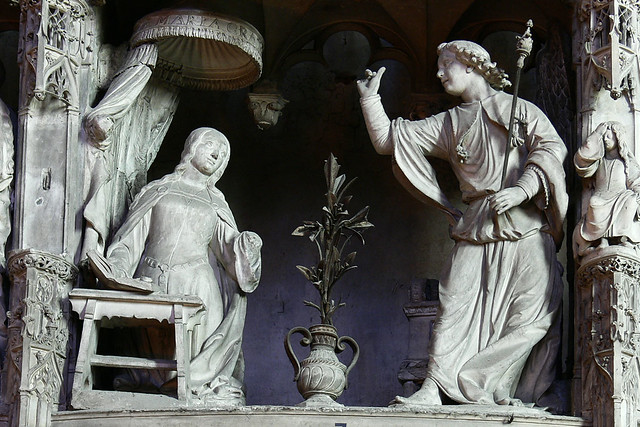
He is notably associated with the sculptural programme of the choir screen at Chartres Cathedral, for which he is credited with carving a number of the narrative relief scenes. The Chartres screen represents one of the most ambitious sculptural undertakings of the French Renaissance, executed by multiple sculptors working within a coordinated workshop structure. Soulas’s participation places him among the significant regional artists contributing to this major royal-ecclesiastical commission.
Style and characteristics
The reliefs attributed to Jehan Soulas at Chartres and in related works are characterised by a measured naturalism, careful facial modelling, and controlled handling of drapery. While the compositions retain aspects of late Gothic structure—particularly in their clarity of narrative and rhythmic arrangement of figures—they also display an increasing engagement with Renaissance spatial coherence and bodily weight.
Rather than adopting Italian classicism wholesale, Soulas’s work reflects the selective assimilation of Renaissance motifs, filtered through established French workshop practice. This balance is typical of Loire Valley sculpture of the period and situates his work within a broader transitional current in early sixteenth-century French art.
Significance
Although relatively little is known about his life, Jehan Soulas’s documented contribution to the Chartres choir screen secures his position within the history of French Renaissance sculpture. His work exemplifies the collaborative nature of major sculptural projects in this period and illustrates the role of regional workshops in shaping some of the most important ecclesiastical monuments of early modern France.