
South Chancel Window - Wolston Warwickshire
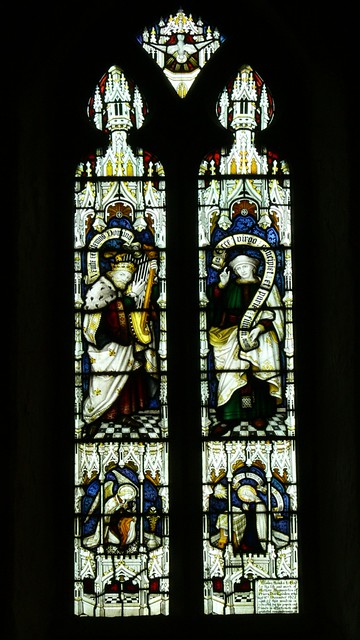
This south chancel window at Wolston, designed by Herbert Bryans, is a two-light composition dated by inscription to 1902 and belongs to Bryans’s early independent period following his departure from the Kempe studio.
Description and iconography
The upper lights present two standing figures beneath tall Gothic canopies, arranged as a typological pairing concerned with prophecy and fulfilment.
-
Left light – King David
The crowned figure holding a harp is King David, identified both by his attribute and by the accompanying Latin inscription. Shown as psalmist and prophet, David represents the Old Testament voice traditionally understood as foretelling the Incarnation. -
Right light – The Virgin Mary
The figure opposite is identified by the inscription Ecce virgo concipiet (“Behold, a virgin shall conceive”), taken from Isaiah 7:14. The text confirms the figure as the Virgin Mary, presented as the fulfilment of prophecy. She holds a scroll bearing the inscription, emphasising her role within salvation history rather than narrative action.
The lower panels beneath the principal figures depict the Annunciation:
-
The Archangel Gabriel, kneeling in reverence, occupies the lower panel beneath David.
-
The Virgin Mary, shown receiving the angel’s message in a composed and contemplative attitude, appears beneath her upper-light figure.
This vertical arrangement creates a deliberate theological sequence: prophecy above, fulfilment enacted below.
Style and context
The window is framed by an elaborate Perpendicular Gothic architectural scheme, largely executed in white glass with restrained use of colour. The clarity of the drawing, the calm expression of the figures, and the controlled palette reflect Bryans’s grounding in the Kempe tradition, while the relative sobriety of ornament and emphasis on legibility point toward his independent design approach.
Dated 1902, the Wolston south chancel window illustrates Bryans’s ability to combine Pre-Raphaelite figure ideals with a disciplined ecclesiastical restraint appropriate to a parish-church setting. Its thoughtful integration of inscription, typology, and narrative marks it as a coherent and mature statement within his early solo work.