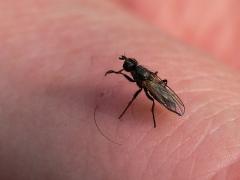
A large family of Muscoidea flies that are commonly called "root maggots" as the larvae commonly feed on the roots of plants. Some species are agricultural pests.
A large family of Muscoidea flies that are commonly called "root maggots" as the larvae commonly feed on the roots of plants. Some species are agricultural pests.
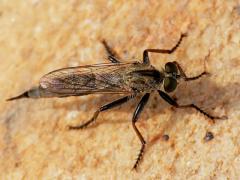
Although harmless to humans, the Asilidae are powerful insects with sharp piercing mouthparts.
A tribe of hoverflies that resemble the Syrphini except that they have a black scutellum instead of the yellow scutellum of the Syrphini tribe.
A group of flies that are variously known as 'March flies' or 'love bugs'.
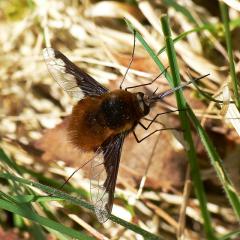
The Bee flies consist of several hundred genera and over 4,500 species worldwide, and there are 9 resident species in the UK.
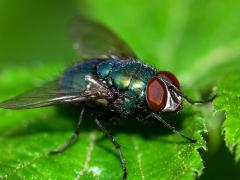
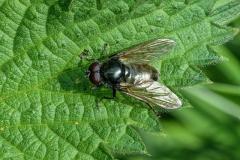
The Calliphoridae are a large and widespread family of flies, commonly known as blowflies, carrion flies, greenbottles, bluebottles, and cluster flies. There are over 1,100 known species worldwide, and many are familiar insects often seen buzzing around gardens, fields, and urban areas.
The Cheilosiini are a small but distinctive tribe of hoverflies within the subfamily Eristalinae, best known for their wasp-like or sombre, non-typical syrphid appearance and their association with fungal habitats. Unlike the brightly marked flower-visiting hoverflies familiar to most observers, members of this tribe are generally dark, slender, and unobtrusive, often resembling solitary wasps or small empidid flies rather than typical syrphids.
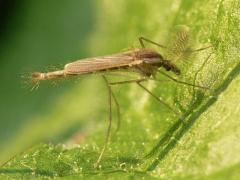
The Chironomidae are a large family of small, delicate flies commonly known as non-biting midges. They are found all over the world, with more than 5,000 described species. Although they look a little like mosquitoes, they do not bite and are completely harmless.
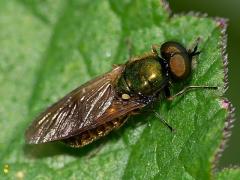
Chloromyia is a genus of soldier flies in the Stratiomyidae family.
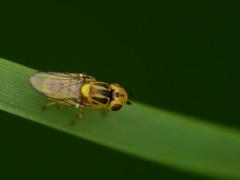
A family of small grass flies, which are sometimes called frit flies. There are some 2000 species and 160 genera world wide.