
Index of Gothic Sculpture

This polychromatic stone Holy Sepulchre in the church of Notre-Dame Neufchâtel-en-Bray dates from the mid C15.
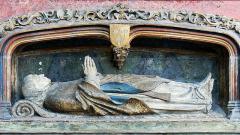
This mid-fifteenth-century effigy depicts a priest shown vested for the celebration of Mass, carved in low relief and set beneath an architectural recess.
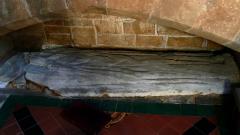
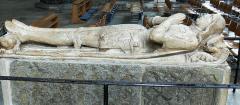
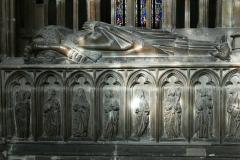
This monument of an alabaster knight wearing Milanese armour is dedicated to Robert Lord Hungerford (d1464).
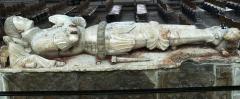
Bishop Ferry de Beauvoir (d1473). Amiens Cathedral France.
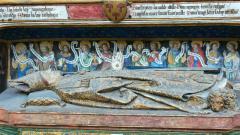
This carved alabaster monument of Bishop John Stanbury contains his effigy and has saints and angels as mourners carrying shields around all sides. Unfortunately the heads of the angels were chipped off during the reformation.
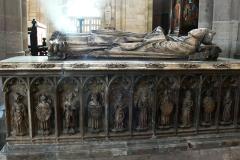

Late Gothic staircase by Guillaume Pontis in 1480, under the direction of cardinal and archbishop William Estouteville. Rouen Cathedral.
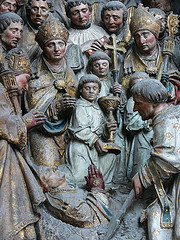
Polychrome reliefs retelling the legend of St Firmin a disciple of St Saturninus of Toulouse, founded the first church in Amiens in the third century.
Lord John Cheney (d1499) was a Lancastrian supporter who in 1483 had supported the Duke of Buckingham's rebellion against Richard III. When Buckingham's rebellion failed he joined Henry Tudor in Brittany and returned with him from France in 1485.
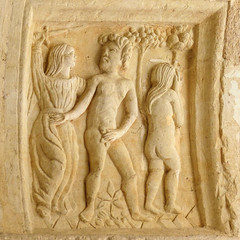
This group of eleven relief panels form part of the carved vault decoration of a sacristy bay at the Royal Abbey of Fontevraud. Executed in a soft, chalky limestone typical of the Loire region, the panels combine biblical narrative scenes with hagiographic episodes from the Life of St Nicholas and include one figure of architectural patronage.
This chantry chapel to Arthur Tudor, covered in tracery and sculptures, was built in 1504. The chest tomb of the 15 year old Prince fills the chapel.


This image shows the Virgin and Child of Chartres Cathedral, commonly known as the Black Madonna of Chartres (Notre-Dame du Pilier). It is one of the most venerated Marian sculptures in France and a central focus of devotion within the cathedral. It was commissioned in 1508 as a black wooden copy of the 13th century silver Madonna that stood on the main altar at Chartres Cathedral.
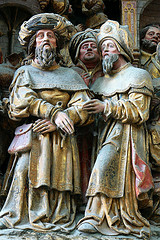
Polychriome reliefs telling the story of St James the Greater, and the conversion of Philetus and Hermogenes. Amiens Cathedral 1511.
This tomb in the South choir contains the effigy of Bishop Richard Mayew (d1516) under an elaborate canopy, and with weepers around the base. The weepers are thought to represent saints and were damaged during the reformation.
This richly animated cycle of polychrome reliefs depicts the episode of Christ Cleansing the Temple (Matthew 21:12–13; Mark 11:15–17; Luke 19:45–46; John 2:13–16). Carved in deep relief and originally conceived as a continuous narrative sequence, the scenes unfold across the west wall of the north transept, drawing the viewer into the crowded precincts of the Temple in Jerusalem.
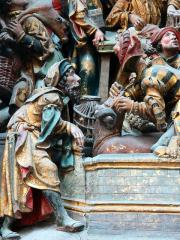
Monument of Adrien Hénencourt (d1530) at Amiens Cathedral. This monument is below the choir screen (1490-1530) depicting the life of St Firmin that canon Hénencourt was responsible for commissioning.
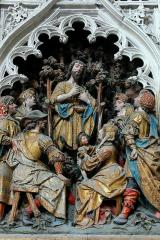
Polychrome reliefs on the north of the choir screen tell the story of the life of John the Baptist.
Pages
- « first
- ‹ previous
- 1
- 2
- 3
- 4