
Longespée, William (3rd Earl of Salisbury)
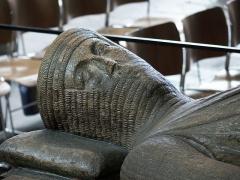
William Longespée, 3rd Earl of Salisbury, was an illegitimate son of Henry II ⓘ and half-brother to Richard I ⓘ and John ⓘ. Through royal favour and marriage, he became one of the leading magnates of early thirteenth-century England and a central figure in the military and political conflicts of the reign of King John and the minority of Henry III.
Royal Service under John
Longespée was a prominent supporter of King John. In 1213 he commanded the English fleet at the Battle of Damme, destroying a large French invasion force assembled by Philip II of France ⓘ. The destruction of the fleet prevented a projected invasion of England.1
In 1214 he fought alongside John’s allies at the Battle of Bouvines, where he was captured. He was later released through negotiated exchange.
He was present at Runnymede in 1215 during the sealing of Magna Carta.2
The First Barons’ War
During the rebellion against John and the invasion of Prince Louis of France (later Louis VIII of France ⓘ), Longespée initially remained aligned with the royalist cause. After John’s death in 1216, he played an important role in securing the position of the young Henry III of England.
He participated in the royalist victory at the Battle of Lincoln (1217) and in the subsequent naval engagement off Sandwich, which ended French intervention.3
Death
In 1225 he accompanied Richard, Earl of Cornwall, to Poitou in support of English claims. Illness forced his return, and he died on 7 March 1226 at Salisbury Castle.
He was buried in Salisbury Cathedral, where his tomb became the earliest known monument in the new cathedral.4
