
Harold Godwinson
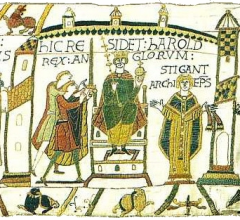
Harold II (c. 1022–1066), also known as Harold Godwinson, was King of England from January to October 1066. His brief reign culminated in the Norman Conquest, one of the defining events of English history.
The last crowned Anglo-Saxon king, Harold’s death at the Battle of Hastings marked the end of native English rule before the Norman dynasty.
Accession
Harold was the son of Godwin, Earl of Wessex, the most powerful nobleman in England under Edward the Confessor ⓘ. Upon Edward’s death in January 1066, the Witan elected Harold king. He was crowned at Westminster shortly thereafter.
His accession was immediately contested by two external claimants:
-
William the Conqueror ⓘ, Duke of Normandy
-
Harald Hardrada, King of Norway
The Campaigns of 1066
In September 1066, Harald Hardrada invaded northern England. Harold marched north and defeated him decisively at the Battle of Stamford Bridge.
Almost immediately, William of Normandy landed in Sussex. Harold led his forces south, meeting the Normans at the Battle of Hastings on 14 October 1066. Harold was killed in battle, traditionally said to have been struck in the eye.
Significance
Harold II’s reign lasted less than a year, yet its consequences were immense. His death cleared the way for William’s conquest and the transformation of England’s ruling elite, legal structures, and cultural orientation.
The events of 1066 reshaped England’s political identity and tied it more closely to continental Europe.
Succession
Preceded by: Edward the Confessor ; Succeeded by: William I of England
Rival claimant: William I of England