
Notre-Dame Cathedral - Sées France
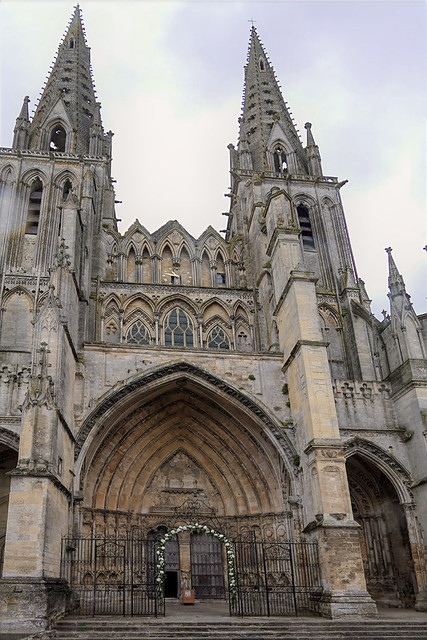
The Cathedral of Notre-Dame at Sées, in Normandy, is the seat of the Diocese of Séez and a significant example of French Gothic architecture in the former duchy of Normandy. The present structure was largely built between the 13th and 14th centuries, replacing earlier Romanesque buildings.
The cathedral’s west façade is characterised by its twin slender towers and deep Gothic portal, framed by pointed archivolts and sculptural decoration.
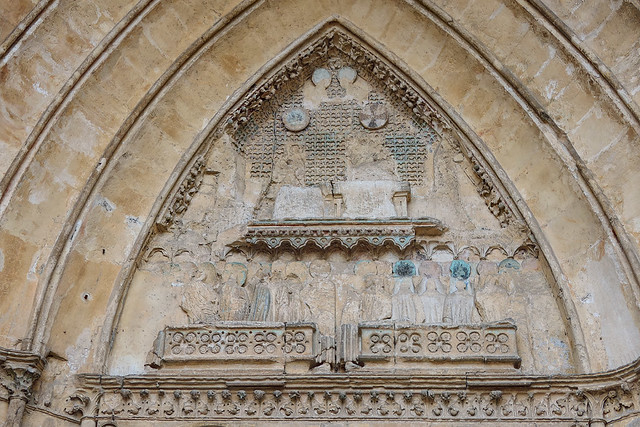
The tympanum ⓘ and surrounding stonework reflect the High Gothic vocabulary that had spread across northern France by the mid-thirteenth century. Though weathered tympanum appears to have represented the Coronation of the Virgin, with Christ and Mary enthroned in the upper register and a row of apostles below. Although much detail has been lost, the surviving symmetry and tiered composition suggest a Marian exaltation.
The nave and choir display a marked verticality typical of Gothic design, with tall arcades, triforium, and clerestory ⓘ creating a unified elevation. Although smaller in scale than the great cathedrals of Paris or Chartres, Sées demonstrates the regional adaptation of Gothic form within Normandy.
The cathedral was historically linked to the ecclesiastical and political life of the duchy and later kingdom of France. As the episcopal seat, it stood at the intersection of Norman identity, Capetian authority, and later royal administration.
