Preedy, Frederick
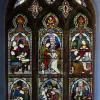
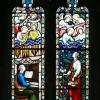
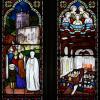
Frederick Preedy (1820–1898) was an English architect and stained-glass designer active during the mid nineteenth century. Trained as an architect in Worcester, he belonged to the generation shaped by the Gothic Revival and the principles promoted by the Ecclesiological movement. Unlike most of his contemporaries, Preedy not only designed stained glass but also manufactured it himself, operating as an independent practitioner rather than through a large commercial studio.
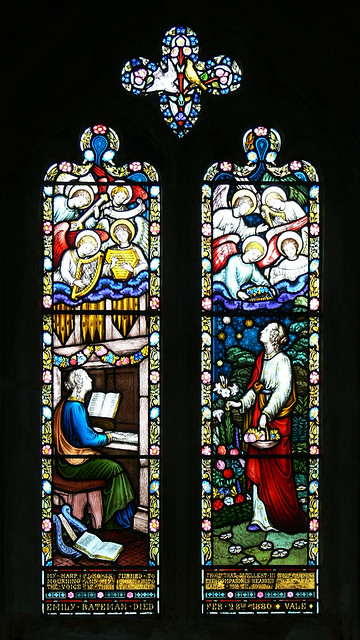
Preedy’s stained glass is characterised by clear figural drawing, restrained but effective colour, and an architectural approach to composition that reflects his training as a church architect. His designs draw consciously on medieval models, favouring legibility and devotional clarity over pictorial richness. Windows are typically organised in a disciplined hierarchy of figures, inscriptions, and canopies, well suited to parish settings and didactic programmes.
His work is found primarily in parish churches across England, with a notable concentration in the Midlands and eastern counties. In Northamptonshire, several windows attributed to Preedy have been identified through regional survey work, forming a coherent group within the wider context of Victorian church restoration and renewal. These commissions suggest a sustained engagement with rural parishes rather than occasional or isolated activity.
Although less widely known than major Victorian stained-glass firms, Preedy occupies a distinctive position as an architect-maker whose glass reflects a close integration of structure, imagery, and theology. His work offers valuable insight into the diversity of nineteenth-century stained glass practice beyond the large metropolitan studios.