
Art and Architecture
This section presents catalogue entries for art and architecture from antiquity to the modern period, with a particular emphasis on medieval and Renaissance Europe. Works are documented through site photography, close visual analysis, and contextual description, and are situated within broader historical, geographical, and artistic frameworks.
Rather than separating architecture, sculpture, and decoration into fixed categories, the site approaches buildings, objects, and images as interconnected forms of visual culture. Architectural sculpture, monuments, wall painting, and stained glass are therefore considered both as individual works and as elements embedded within specific places.
The sections below provide structured points of entry. Each currently opens as a navigable collection and will be refined over time to support more granular browsing by period, location, material, and theme.
Stained Glass
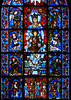 Medieval and later stained glass, including narrative cycles, individual panels, canopies, donors, and fragmentary survivals. Entries focus on iconography, workshop practice, and the relationship between glass, light, and architectural setting.
Sculpture
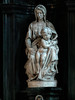 Sculptural works from antiquity to the modern period, including free-standing sculpture, reliefs, tombs, effigies, and architectural sculpture such as portals, tympana, capitals, and façade programs. Emphasis is placed on form, material, function, and placement.
Historic Locations
 Buildings and sites approached as historical places rather than abstract forms. This section situates works in context, bringing together architecture, sculpture, glass, and painting as they survive within churches, civic buildings, and urban settings.
Monuments
 Funerary and commemorative monuments, ecclesiastical and secular. Entries examine patronage, inscription, iconography, and the historical circumstances of commemoration.
Wall Painting
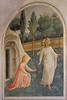 Medieval and later wall painting and fresco, including complete cycles and fragmentary remains. Documentation addresses technique, condition, iconography, and architectural setting.
Methodological note
Many works are approached from more than one perspective: a sculpted tympanum ⓘ may be read as sculpture, as part of a building, and as an element within a wider site. Entries are cross-referenced accordingly, allowing individual objects to be explored through multiple contexts without duplication.