England
Francis Tanfield and His Family
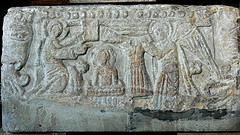
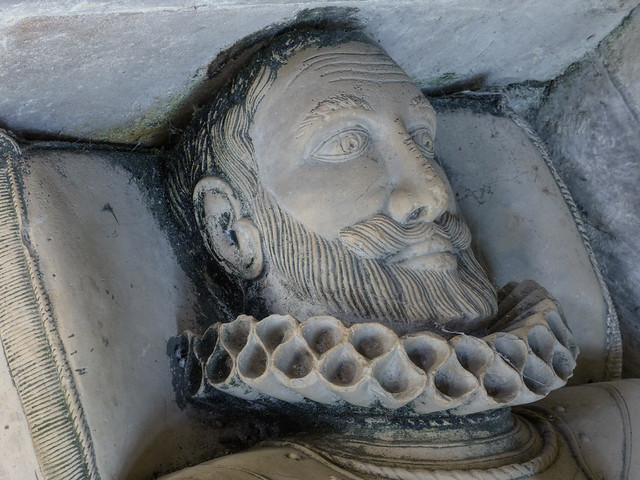
Francis Tanfield was a member of a gentry family long settled at Gayton, Northamptonshire. The Tanfields held land in the county from at least the 14th century, and like many such families, maintained their position through estate management and service in local administration. Francis died in 1558, and his monument in St Mary’s Church was probably commissioned by his widow soon afterwards.
Frederick Bagshaw - Thrapston, Northamptonshire
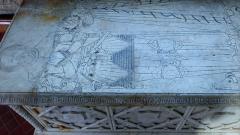
Ce tableau commémoratif mural rend hommage à Frederick John Salmon Bagshaw, lieutenant et adjudant du 36ᵉ régiment de l’infanterie indigène du Bengale, mort au début de la révolte indienne de 1857. Le monument se trouve à Thrapston (Northamptonshire), paroisse dont son père, W. S. Bagshaw, était le recteur.
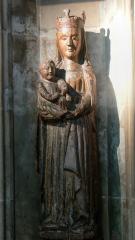
French Virgin and Child - Salisbury Cathedral
This wooden sculpture of the Virgin and Child, dating to the fourteenth century (most probably the mid to late 1300s, though sometimes described as early fifteenth century), is of Continental—likely French—origin.
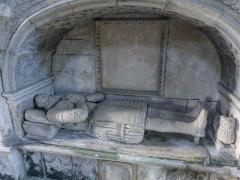
Fulk Woodhul effigie - Thenford Northamptonshire
Cette effigie funéraire couchée, dédiée à Fulk Woodhul, date du début du XVIIᵉ siècle et se trouve dans l’église de Thenford (Northamptonshire). Le défunt est représenté allongé de tout son long dans une niche architecturée, selon une formule héritée du Moyen Âge mais toujours en usage dans l’Angleterre post-réformée.

Gilbert III de Clare
Gilbert III de Clare était un fervent partisan d'Édouard II. Il avait pris part avec lui au combat à la bataille de Bannockburn, le 24 Juin 1314, où hélas il fut tué à l'âge de 23 ans. Il était également l'un des Lords ordonnateurs qui en 1311 commandèrent l'exil de son beau frère Piers Gaveston qui était alors le favori Édouard II. Il est le dernier de la famille des Clare à être enterré à Tewkesbury. Après sa mort, les biens de la famille Clare fut divisés entre ses trois sœurs.
Great Malvern Priory
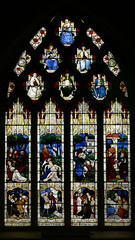
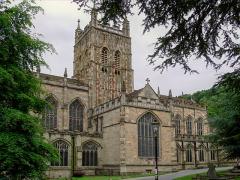
Great Malvern Priory is a former Benedictine priory church whose architecture, stained glass, and monuments preserve a long and complex record of religious life from the Norman period to the present. Founded in the later eleventh century as a dependent cell of Worcester Cathedral Priory, the site occupies a position of early importance within the Norman monastic expansion in western England.