14th century

Kings and Prophets


On either side of the central window in the chancel of Tewkesbury abbey are four windows of five lights. Each window has a central figure that represents one of the kings from the Old Testament and lights on either side contain images depicting a prophet. These windows are dated from 1338-1340.


Knights of Tewkesbury 1

The north west window in the chancel contains images of four knights who were important descendants of the Abbey's founder Robert Fitzhamon, along with Robert himself.


Knights of Tewkesbury 2

The south west window in the chancel contains images of four knights who were important descendants of the Abbey's founder Robert Fitzhamon.


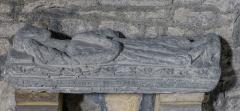
Mabilia de Murdak Tomb - Gayton Northamptonshire

Mabilia de Murdak Tomb - Gayton Northamptonshire

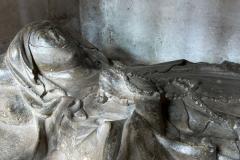
The Tomb of Mabilia de Murdak (also spelled Mabilla or Mabila) is a small 14th-century medieval monument. The tomb is part of a collection of stone memorials in the north chapel (or Gayton Chapel), which includes effigies of local nobility tied to dramatic family events, such as murder and pilgrimage.

Massacre of the Innocents - St Ouen, Rouen

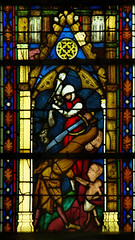
Massacre of the Innocents

These two stained-glass panels from the choir clerestory of St Ouen form a paired narrative of the Massacre of the Innocents, rendered in the incisive and highly expressive manner characteristic of the early 14th-century Norman workshops. Though each panel stands within its own Gothic architectural frame, complete with gabled canopies, foliate bosses, and alternating bands of strong primary colour, the scenes are conceived as a continuous episode of violent disruption, unfolding across two moments of the same biblical tragedy.

Medieval Stained glass at Stanford on Avon

St Nicholas parish church in Stanford on Avon, Northamptonshire, contains a large amount of stained glass dating from c1330 - 1540. The early glass contains images of Saints and Bishops, whilst the later glass contains Netherlandish roundels, and images of the Cave family that were the donors.

Pages

Subscribe to 14th century