11th century

Archbishop Anselm of Canterbury

Anselm of Canterbury was one of the most influential churchmen and theologians of the late 11th and early 12th centuries, whose archiepiscopate was shaped by repeated conflict with royal authority over the independence of the Church. Appointed Archbishop of Canterbury in 1093, Anselm soon found himself at odds with King William II of England (William Rufus), particularly over the appointment of bishops, the demand that Anselm perform homage to the king, and royal interference in ecclesiastical affairs.

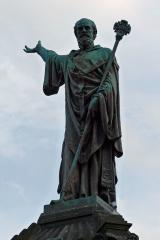
Pope Urban II

Following the death of Pope Victor III on 16 September 1087, Odo of Lagery was elected pope as Urban II on 12 March 1088. His election took place not in Rome but in Terracina, south of the city, since Rome itself was controlled by the antipope Clement III, who had been installed with the backing of the Holy Roman Emperor Henry IV during the Investiture Controversy.

Robert Curthose

Robert Curthose (c. 1054–1134) was the eldest son of William the Conqueror and a central figure in the turbulent politics of Anglo-Norman England in the generation after the Conquest. Although designated heir to the Duchy of Normandy, Robert’s career was marked by chronic financial weakness, political miscalculation, and ultimately long captivity.

William II, King of England

William II of England, known as William Rufus, ruled from 1087 to 1100 as the third son of William the Conqueror. Energetic, forceful, and often controversial, he continued his father’s centralising policies, asserting strong royal authority in England while maintaining influence over Normandy amid ongoing dynastic tensions.

Subscribe to 11th century