11th century

Archbishop Anselm of Canterbury

Anselm of Canterbury was one of the most influential churchmen and theologians of the late 11th and early 12th centuries, whose archiepiscopate was shaped by repeated conflict with royal authority over the independence of the Church. Appointed Archbishop of Canterbury in 1093, Anselm soon found himself at odds with King William II of England (William Rufus), particularly over the appointment of bishops, the demand that Anselm perform homage to the king, and royal interference in ecclesiastical affairs.

Edward the Confessor

Edward the Confessor

Edward the Confessor was king of England from 1042 until his death in 1066. Son of Æthelred II, he spent many years in exile in Normandy before returning to claim the throne. His reign was comparatively peaceful, characterised by strong ties with the Church and an emphasis on lawful governance rather than military expansion.

Holy Roman Emperor Henry II

Holy Roman Emperor Henry II

Henry II, the last ruler of the Ottonian dynasty, was crowned Holy Roman Emperor in 1014. His reign is distinguished by strong cooperation with the papacy, energetic involvement in Italian affairs, and sustained support for ecclesiastical reform. He is the only German king to be canonised, recognised as Saint Henry by the Church (canonised 1146).

Pope Benedict VIII

Benedict VIII, born Theophylact of the powerful Tusculan family, reigned during a turbulent yet formative period of eleventh-century reform. His pontificate was marked by military intervention, close collaboration with imperial authority, and early alignment with the monastic reform movement centred on Cluny Abbey .

Pope John XIX

John XIX, born Romanus of the Tusculan family, was pope from 1024 to 1032. He was elected on 19 April 1024, ten days after the death of his brother Benedict VIII, continuing the dominance of the Tusculan house over the papacy. Prior to his election, Romanus had held senior secular offices in Rome, including those of consul and senator, and functioned as a civil leader within the city.

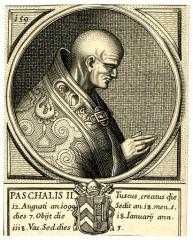
Pope Paschal II

Pope Paschal II

Paschal II, born Raniero Ranieri, was a former Cluniac monk who continued the reforming programme of his predecessors, notably Pope Gregory VII and Pope Urban II . Elected pope in 1099, his pontificate was dominated almost entirely by the Investiture Controversy, the struggle over whether secular rulers could appoint bishops and other senior church officials.

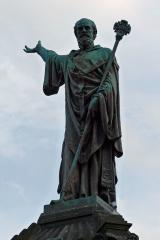
Pope Urban II

Pope Urban II

Following the death of Pope Victor III on 16 September 1087, Odo of Lagery was elected pope as Urban II on 12 March 1088. His election took place not in Rome but in Terracina, south of the city, since Rome itself was controlled by the antipope Clement III, who had been installed with the backing of the Holy Roman Emperor Henry IV during the Investiture Controversy.

Pope Victor III

Pope Victor III

Victor III, born Desiderius, was abbot of Monte Cassino before his election to the papacy. A close associate of Gregory VII, he supported the Gregorian Reform and the assertion of ecclesiastical independence from secular authority.

Election and Pontificate

Elected on 24 May 1086, his accession occurred during the height of the Investiture Controversy. Rome remained under the control of the antipope Clement III, backed by Emperor Henry IV. Victor initially withdrew to Monte Cassino before accepting consecration in May 1087.

Pages

Subscribe to 11th century