
Louis VIII of France
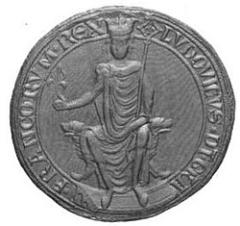
Louis VIII, known as Louis the Lion, was King of France from 1223 until his death in 1226. Though his reign was brief, it consolidated Capetian authority in both northern and southern France and strengthened the monarchy’s territorial reach.
As crown prince under Philip II of France ⓘ, Louis had already played a significant political and military role, including intervention in England during the First Barons’ War.
Early Career and English Campaign
In 1216, during the rebellion of English barons against John, King of England, Louis accepted an invitation to claim the English crown through his wife, Blanche of Castile, granddaughter of Henry II of England ⓘ. He entered London and was proclaimed king by rebel barons, though never crowned.
After John’s death and the accession of Henry III of England, support for Louis weakened. He was defeated at the Battle of Lincoln (1217) and withdrew under the Treaty of Lambeth.
Accession and Capetian Consolidation (1223)
Louis succeeded his father Philip II in 1223. His reign continued the Capetian policy of expanding royal authority at the expense of powerful regional lords.
Albigensian Crusade and Southern France
Louis resumed and intensified Capetian involvement in the Albigensian Crusade against the Cathar movement in southern France. In 1226 he led a royal campaign into Languedoc, compelling the submission of key territories and strengthening direct royal influence.
Though framed as a crusade, the campaign also advanced Capetian territorial integration.
Death and Succession
Louis VIII died in November 1226 while returning from campaign, likely of dysentery. His son, Louis IX of France, succeeded under the regency of Blanche of Castile.
Significance
Although overshadowed by his father Philip II and his son Louis IX, Louis VIII played a transitional role. His reign reinforced the territorial and administrative foundations of Capetian monarchy and advanced royal authority into the south of France.
Succession
Preceded by: Philip II of France