
The South Porch at Chartres: Authority, Bread, and Judgement
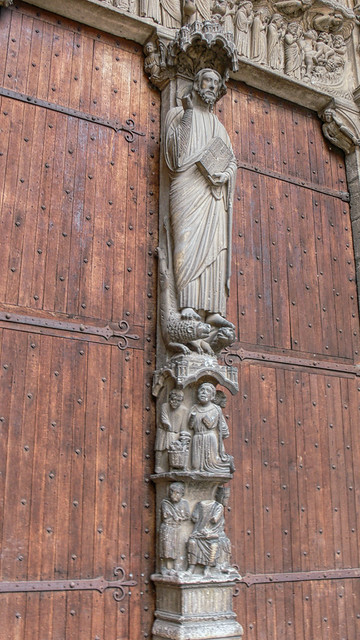
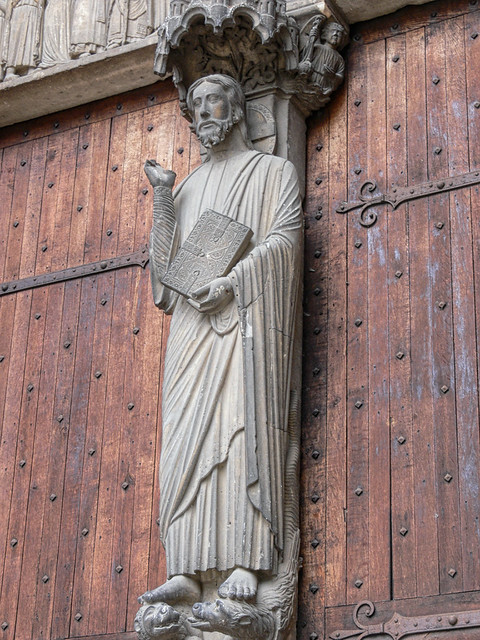
At the centre of the south porch stands the trumeau, forming the axis of the entire portal. Christ rises at its summit, serene yet authoritative, blessing with one hand while trampling the lion, asp, basilisk, and dragon beneath His feet. The imagery unmistakably recalls Psalm 90 (91):13: “Thou shalt tread upon the lion and adder; the young lion and the dragon shalt thou trample under feet.” Medieval readers understood these beasts as embodiments of demonic power, pride, tyranny, and cosmic disorder. Christ’s gesture is not merely protective; it is juridical. He conquers.
Directly below Him kneels and, beneath that, sits a noble figure traditionally identified as the Count of Chartres. In the upper register he distributes loaves from a basket; in the lower he appears enthroned in authority. The loaves are conspicuously large. No recipients are shown. The scene is emblematic rather than documentary.
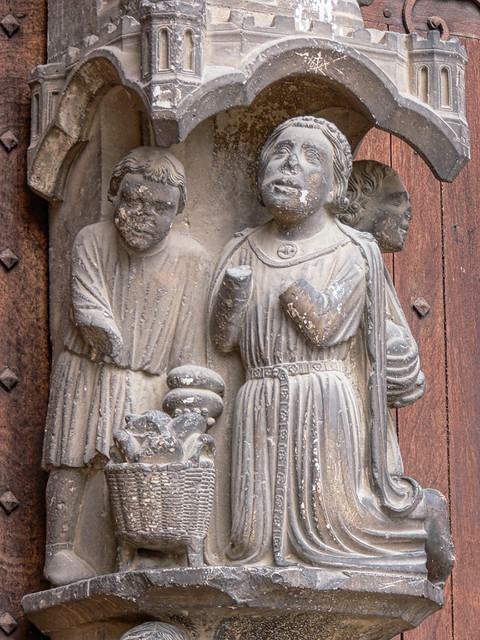
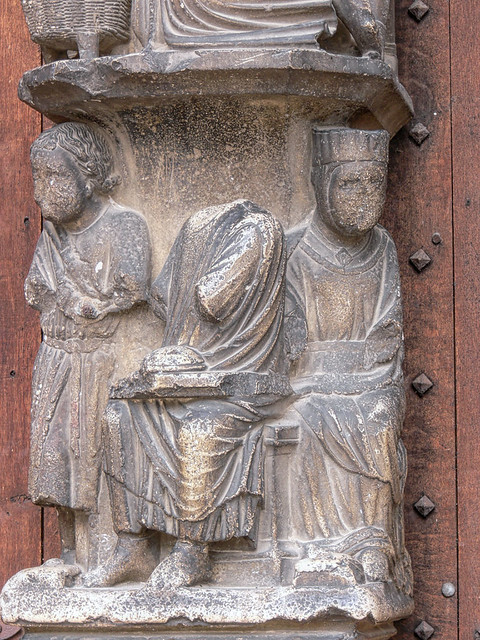
Bread, in Chartres, was never a trivial object. The cathedral’s stained glass repeatedly depicts baking, offering, and sale. Bread sustained the town economically and bound it ritually through offerings in kind and blessed distribution. Here, however, bread functions less as alms than as symbol. The count offers sustenance beneath Christ’s dominion. Secular power is presented not as force but as provision, and provision under judgement.
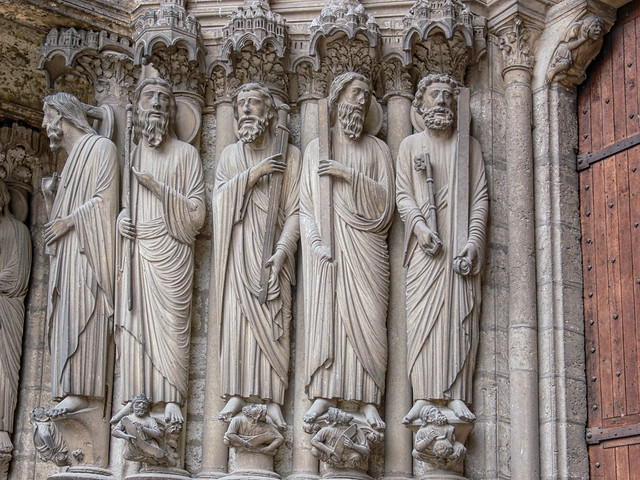
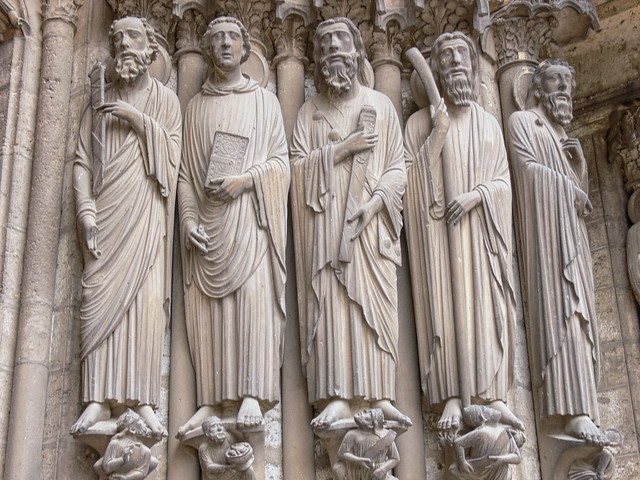
Flanking the doorway in the embrasures stand the Apostles. Like Christ above, several are shown standing upon subdued figures, their persecutors, embodiments of opposition, or symbolic oppressors. The visual echo of Psalm 90 continues outward from the trumeau.
Placed beside the count’s image, the Apostles recalibrate authority. The Church’s power derives from witness and suffering. Secular rulers, by implication, must align with that spiritual order. Martyrdom, confession, and governance are gathered into a shared theological grammar of victory, victory not as domination, but as rightly ordered endurance.
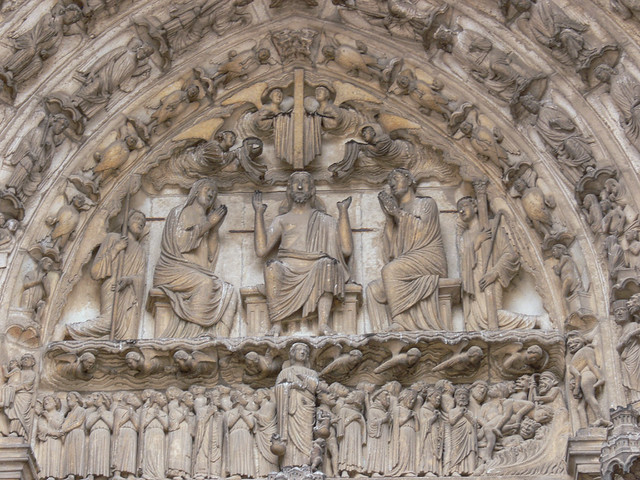
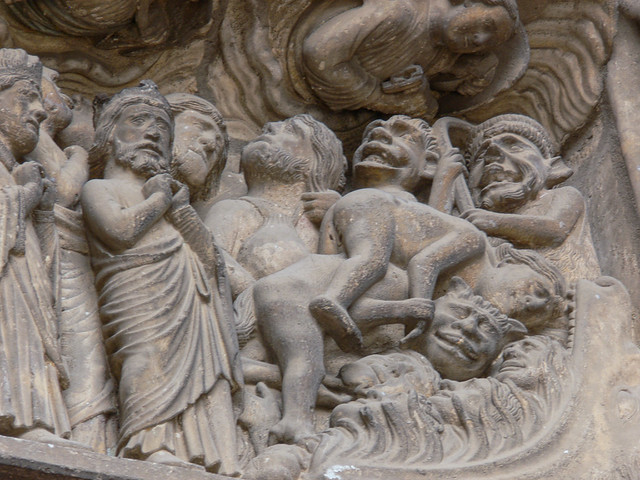
Above the doorway unfolds the Last Judgement. Christ enthroned presides over the separation of saved and damned. Angels sound trumpets; souls rise; justice is rendered. Beneath that Judgement stands the count offering bread. Beneath Christ trampling beasts stands secular authority. Beneath the Apostles trampling persecutors stands the Church militant.
The message is unmistakable: power is not autonomous. Lordship is not self-justifying. All authority, ecclesiastical and secular, stands beneath divine scrutiny.
The bread offered below thus becomes eschatologically charged. In Matthew 25, feeding the hungry is a criterion of judgement. Whether or not the sculptors intended explicit citation, the association would have been unavoidable. To feed rightly is to rule rightly; to rule rightly is to stand secure at judgement.
Conclusion: Ordered Authority at the Threshold
Carved in the decades following the riot of 1210 (see Riot at the Cathedral Cloister, October 1210), the south porch of Chartres Cathedral presents a carefully structured vision of moral and civic order.
The vertical columns of Vices and Virtues articulate forces that destabilise communal life, Pride cast from horseback, Wrath, Discord, Rebellion, each answered by its corrective: Humility, Wisdom, Peace, Obedience, Perseverance. Instability occupies the lower register; composure rises above.
At the centre, Christ tramples the beasts of Psalm 90, divine sovereignty over chaos. Beneath Him kneels the Count distributing bread. In a medieval city where labour, immunity, and economic regulation were actively contested, bread signified not merely charity but civic provision itself. The image places temporal authority, and the governance of sustenance, beneath Christ’s dominion.
The flanking portals reinforce the theme. Stephen’s martyrdom recalls violence against clerical authority. Thomas Becket ⓘ evokes the limits of secular overreach. Martin and Nicholas model just and charitable lordship. Above all stands the Last Judgement.
The porch faces toward the count’s castle. In the decades after the fire of 1194, relations between the cathedral chapter and Count Louis were strained. The rebuilding of the cathedral was itself an ecclesiastical assertion of permanence and authority. In that setting, the sculpture presents not a record of generosity but an image of ideal rulership: the lord who feeds his people and submits to divine sovereignty.
The porch does not attack secular power outright. It orders it.
Bread rests in the Count’s hands, but Christ stands above him.
In that vertical alignment, the south porch articulates a constitutional theology for a divided city: civic life grounded in moral hierarchy, provision subject to divine law, and all authority measured against judgement.