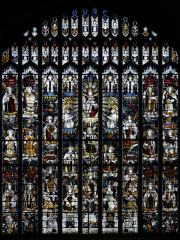
Justice - Gloucester Cathedral

The south aisle west window of Gloucester Cathedral contains this window on the theme of Justice by John Hardman & Co., dated 1865.
The south aisle west window of Gloucester Cathedral contains this window on the theme of Justice by John Hardman & Co., dated 1865.
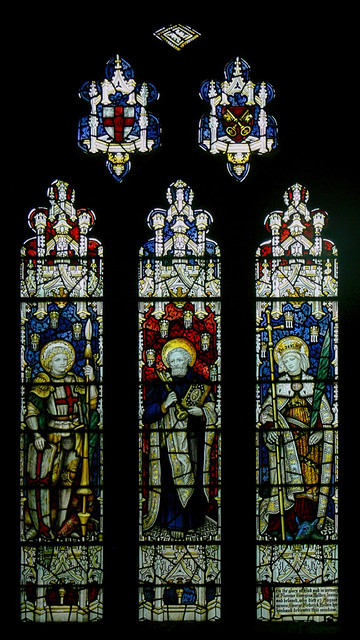
Charles Eamer Kempe (1837-1907) originally trained as a priest, but due to a stammer studied archeticture the main part of which being the 14th century English Gothic, George Bodley. Working for Bodley, Kempe learned the art of decorating church walls and ceilings. However, he became interested in stained glass and studied the art and craft at the studios of Clayton & Bell.
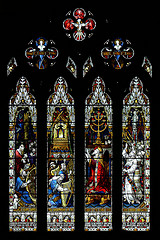
Stained glass window (1880) by John Hardman in the north aisle of Worcester Cathedral depicts King Solomon praying in front of the Arc of the Covenant. Musicians playing harps and trumpets are on either side of him.
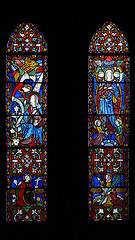
John Hardman windows of 1854 depicting The Annunciation, The Assumption, and St. Stephen ⓘ.
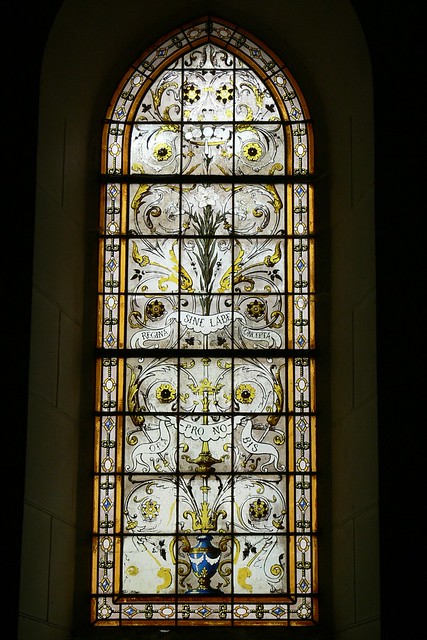
Claudius Lavergne was among the foremost figures of the mid-nineteenth-century revival of stained glass in France, a painter and critic whose intellectual formation under Jean-Auguste-Dominique Ingres and collaboration with Adolphe-Napoléon Didron positioned him at the intersection of academic draughtsmanship, historical research, and religious reform.
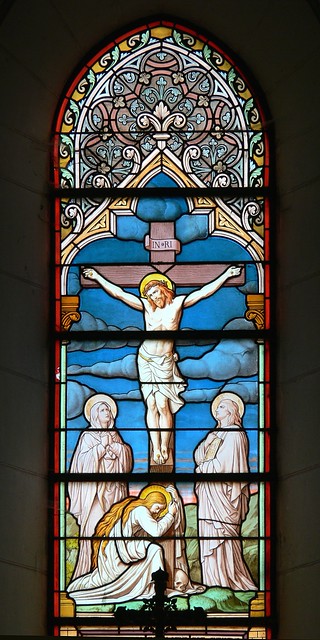
Worked alongside his father, Claudius Lavergne, and took over the business after his father death in 1887.
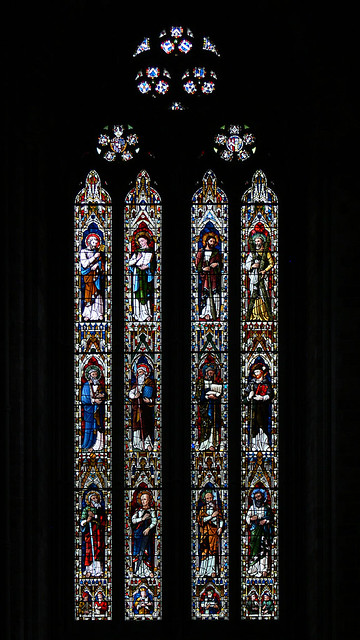
Lavers, Barraud, and Westlake were part of the Victorian Gothic Revival of stained glass. Originally Nathaniel Wood Lavers and Francis Philip Barraud had worked for Powell & Sons, and Lavers started his own studio in 1855 and was Barraud joined him in 1858 as the designer.
The vast south transept window at Lichfield Cathedral is one of the most imposing works of High Victorian stained glass in the building. Installed between 1869 and 1873 as part of the 19th-century restoration campaign, it was designed and executed by the prolific Gothic Revival studio Clayton & Bell. Comprising nine tall lancets crowned by rich tiers of tracery lights, the window forms a complex yet coherent theological cycle centred on the Majesty of Christ and the ranks of heavenly and ecclesiastical witnesses.

The west window by Hardman (1886) contains ten scenes from the life of Christ.
Hardman window (1888) St Philip ⓘ on the right is asking where they can buy bread to feed the crowd