England

Wall paintings at Burton Dasset

The church of All Saints as Burton Dassett in Warwickshire dates from the early C12 through to C13. The walls were plastered with 'daub', lime, chopped straw and animal hair and over which various wall painting have been executed. At various times over the centuries the paintings have been whitewashed over and replaced with new works. These include from the C13 depiction of the 'Doom' to  highly ornamented texts..
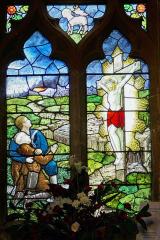
 

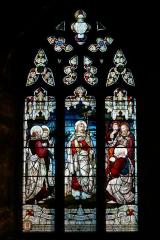
War Memorial Window - Bugbrooke, Northamptonshire

War Memorial Window - Bugbrooke, Northamptonshire

This two-light window, installed shortly after the First World War (1919–1920), commemorates the men of the parish who died in the conflict.

A plaque beneath records:

“To the Glory of God and in memory of the gallant men of this Parish who gave their lives for King and Country in the Great War 1914–1918.”

Warwick - Last Judgment after Michelangelo

Warwick - Last Judgment after Michelangelo

This "Doom" painting in St Mary's Warwick, is copy (1678), by Richard Bird, of Michelangelo's Last Judgment in the Sistine Chapel. The left hand side of the work has been restored but the right hand side left unrestored at present.


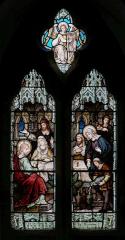
Wedding Feast at Cana - Great Creaton, Northamptonshire

Wedding Feast at Cana - Great Creaton, Northamptonshire

This two-light window, dated 1905, depicts the Marriage Feast at Cana (John 2:1–11), the first miracle of Christ.


Main Lights

Left Light

Christ, robed in red, is seated at table and gestures in blessing. The composition places Him centrally within the domestic setting of the feast. His calm authority contrasts with the animated gestures of the surrounding figures.

Mary sits beside Him, attentive and composed, reinforcing her mediating role in the miracle.

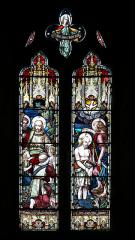
West Window - Warmington, Warwickshire

West Window - Warmington, Warwickshire

This west window depicts Christ welcoming children and the Baptism of Christ, subjects closely associated with initiation into the Christian life and well suited to a west-end position within the church.

Left-hand light:
Christ is shown receiving children, accompanied by the inscription “Suffer the little children to come unto me” (Mark 10:14). The scene emphasises inclusion, blessing, and the openness of the Christian community.

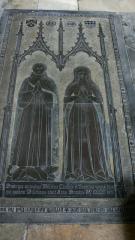
William de Mortimer la Zouche


William de Mortimer la Zouche (d1337) was the second husband of Eleanor de Clare who had these chancel windows made shortly after his death. Eleanor's first husband had been Hugh Despenser the younger, the favourite of Edward II, who was executed at Hereford after Edward II was deposed.


Pages

Subscribe to England