
Silphidae
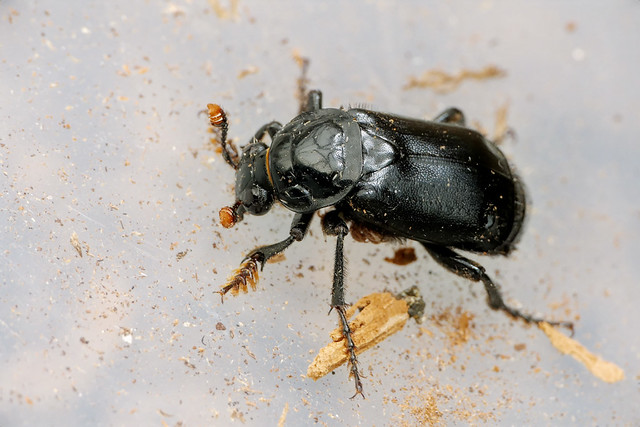
Silphidae are medium to large beetles, often flattened and broad-bodied, with clubbed antennae and elytra that may be short, exposing several abdominal segments. Many species are black or dark-coloured, sometimes with orange or red markings. Members of the subfamily Nicrophorinae (burying beetles) are more compact, with strongly clubbed antennae and vivid banding.
Biology
Adults and larvae are closely associated with carrion, where they feed and develop. Nicrophorus species bury small vertebrate carcasses as a food source for their larvae and show notable parental care. Other silphids occur on larger carrion, sometimes alongside blowflies. Some species also feed on maggots, fungi, or decaying plant matter.
Diversity
A relatively small family of around 200 species worldwide, with about a dozen in Britain and northern Europe. It includes two main groups:
-
Silphinae – larger carrion beetles, often found openly on carcasses
-
Nicrophorinae – burying beetles with distinctive orange bands
Identification
-
Flattened, broad bodies, often robust
-
Antennae with a club, sometimes strongly developed
-
Elytra may not completely cover the abdomen
-
Commonly black with orange/yellow patterning (especially Nicrophorus)
Ecology and Importance
Silphidae are important decomposers, helping to break down vertebrate remains and recycle nutrients. Burying beetles are ecologically notable for their complex reproductive behaviour and parental care. Some species are of forensic interest due to predictable appearances during decomposition stages.

