


Myopa is a distinctive genus within the family Conopidae, comprising medium-sized thick-headed flies that are particularly characteristic of temperate regions of the Palearctic. Adults are readily recognised by their large, rounded head, strongly developed mouthparts, and a stout, often slightly arched abdomen. Many species are dark-bodied, sometimes with reddish or brownish tones, and show less obvious wasp mimicry than genera such as Conops.
Diptera
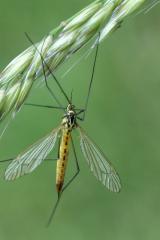
Nephrotoma is a genus of craneflies in the Tipulidae family.
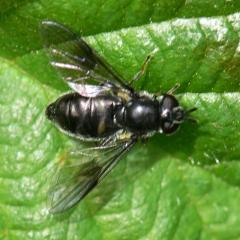
This is a tribe of small to medium sized black hoverflies with usually a pair of spots on tergite 2, and very ocassionally on tergite 3. Also the face is flat and is coverered in long downwards facing hairs.
Separation into genre depends on wing venation.
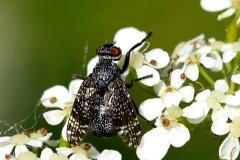
The Platystomatidae, commonly known as signal flies, are a family of acalyptrate ⓘ flies characterised by their often boldly patterned wings and distinctive display behaviour.
Members of the family are medium-sized flies with a robust body and a relatively broad head bearing well-developed compound eyes. Antennae are short to moderate in length, typically with an aristate third segment. The thorax and abdomen are variably coloured, frequently marked with contrasting dark and pale patterning.
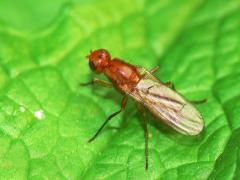
The Psilidae are a small family of flies in the order Diptera, commonly known as rust flies. This group contains around 4 genera and 38 species worldwide, with several found in the UK and Europe. Rust flies are small, slender flies, usually yellowish or orange-brown in colour, which gives them their “rusty” appearance.
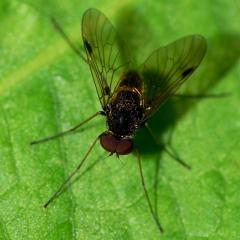
Snipe flies are a small family of flies containing 21 genera. These are medium–sized or large flies with slender bodies and stilt–like legs.

Rhiniidae is a family of flies in the Diptera order.
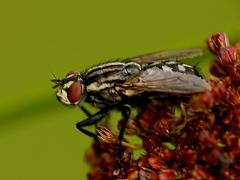
The Sarcophagidae are know as flesh flies, as some species lay their eggs in the open wounds of other animals. However, most of the species lay their eggs in carrion. dung, or decaying material.
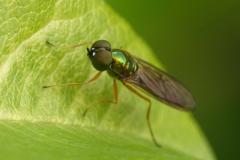
Sargus is a genus of soldier flies in the Stratiomyidae family.
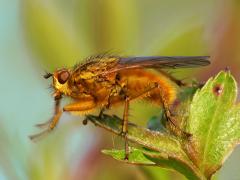
A genus of small to medium sized predatory flies whose larvae feed on other insect larva within animal dung or decaying vegetable matter.
Pages
