14th century

Massacre of the Innocents - St Ouen, Rouen
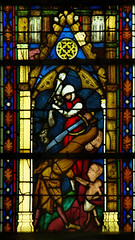
Massacre of the Innocents

These two stained-glass panels from the choir clerestory of St Ouen form a paired narrative of the Massacre of the Innocents, rendered in the incisive and highly expressive manner characteristic of the early 14th-century Norman workshops. Though each panel stands within its own Gothic architectural frame, complete with gabled canopies, foliate bosses, and alternating bands of strong primary colour, the scenes are conceived as a continuous episode of violent disruption, unfolding across two moments of the same biblical tragedy.
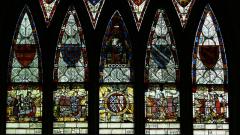
Medieval Stained glass at Stanford on Avon

Medieval Stained glass at Stanford on Avon

St Nicholas parish church in Stanford on Avon, Northamptonshire, contains a large amount of stained glass dating from c1330 - 1540. The early glass contains images of Saints and Bishops, whilst the later glass contains Netherlandish roundels, and images of the Cave family that were the donors.

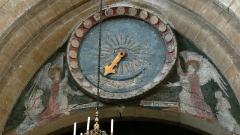
Painted Clock - Raunds

Painted Clock - Raunds

The painted clock a reminder of the passing of time ones mortality and the Last Judgment.


Renaissance Sculpture

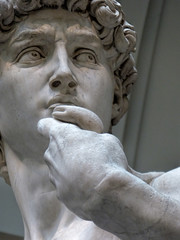
Head of Michelangelo's David


Renaissance sculpture, flourishing from the 14th to the early 17th century, marked a revival of classical antiquity and humanism, centered primarily in Italy, with Florence as its epicenter. Emerging from the medieval Gothic style, it sought to emulate the idealized forms and balanced proportions of ancient Greek and Roman art, while infusing a newfound focus on naturalism and individual expression.

Pages

Subscribe to 14th century