Glass panels from Saint-Denis
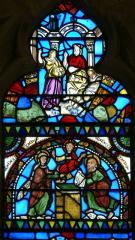
"Presentation in the Temple" panel originally from Saint-Denis near Paris (c1145).
"Presentation in the Temple" panel originally from Saint-Denis near Paris (c1145).
The Gothic period is characterized by the early simplicity of naturalistic figures to the late excessively enriched elegance and elaborate clothing of the figures in the later period, the subject matter of Gothic sculpture featured the mysticism of the mid to late medieval age with an emphasis on suffering and emotion.
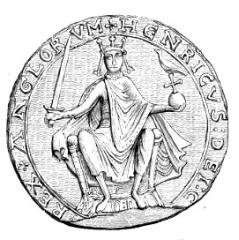
Henry II was King of England from 1154 to 1189 and the founder of what modern historians term the Angevin Empire, a complex of territories stretching from Scotland to the Pyrenees. Through inheritance, marriage, and conquest, Henry ruled England, large parts of western France, and exercised overlordship across the British Isles, making him one of the most powerful rulers of 12th-century Europe.
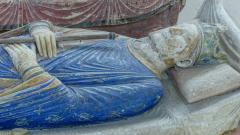
Tomb of King Henry II of England ⓘ at Fontevraud Abbey, France.
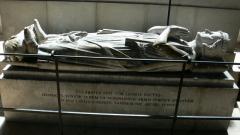
Tomb of Henry the Young King (d1183) son of Henry II of England ⓘ and Eleanor of Aquitaine ⓘ, brother of King Richard I of England ⓘ and King John.
John of England ⓘ, the youngest son of Henry II ⓘ and Eleanor of Aquitaine ⓘ, became king of England in 1199 following the death of his brother Richard I of England ⓘ. His accession was immediately contested by his nephew Arthur of Brittany, whose claim was supported by Philip II of France ⓘ. The resulting struggle marked the beginning of John’s loss of much of the Angevin empire in France and exposed the structural fragility of a dominion already strained by the financial and military demands of Richard’s reign.
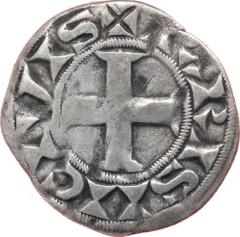
Louis VII was king of France during a formative period in the consolidation of Capetian royal authority. Ascending the throne in 1137, he inherited a kingdom whose effective power rested as much on dynastic alliances and ecclesiastical support as on territorial control. His reign was marked by deep personal piety, close engagement with the Church, and sustained political rivalry with the Angevin rulers of England.

The south porch of Chartres Cathedral contains a series of sculptures, that were made between 1194 and 1230, on the subject of the martyrdom of saints.
The south side of the choir clerestory ⓘ at Bourges Cathedral contains a remarkably complete early-Gothic cycle of New Testament figures, created between about 1200 and 1225. These tall, independent lancets depict apostles and evangelists in a unified iconographic programme, forming a deliberate counterpart to the Old Testament prophets on the north side of the choir.
The only New Testament figures not on the south side are those in the apex window, w.200 - the Virgin and Child with St Stephen ⓘ — which stand on the north side and serve a special liturgical and dedicatory function.
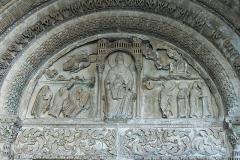
The north portal of Bourges Cathedral is dedicated to the Virgin Mary ⓘ. The Tympanum ⓘ dates from between 1160 and was part of the older church the the Gothic cathedral replaced. This portal suffered a lot of damage during the Wars of Religion in 1562.