Index of all Sculpture entries.
Children and Monuments from the late medieval period to the 17th century.
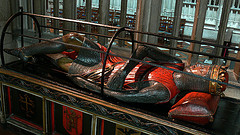
Monuments or memorials to children in English churches were extremely rare until the late 18th and early 19th century. In the 16th century one can find the occassional child tomb amongst the aristocracy, such as that of the The Noble Impe at St Mary's Warwick, but otherwise children do not appear to have warranted memorials in their own right.
Notre-Dame d'Amiens
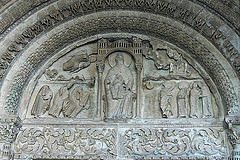
Designated a UNESCO World Heritage Site in 1981 for the coherence of its plan, and the beauty of its three-tier interior elevation Notre-Dame d'Amiens, is the tallest completed Gothic church and largest cathedral in France. The Romanesque cathedral had been destroyed by fire in 1218, and Bishop Evrard de Fouilly employed Robert de Luzarches as the architect to build the new cathedral in the Gothic style to house the head of John the Baptist which had been bought back as a relic by Wallon de Sarton returning from Constantinople in 1206 following the 4th crusade.
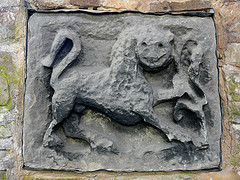
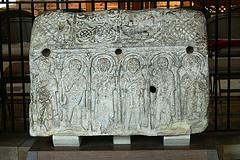
Anglo Saxon Sculpture
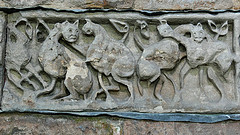
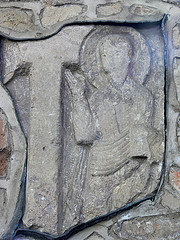
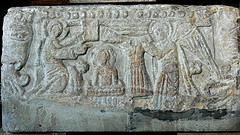
Ango Saxon sculpture is divided into two main periods, that before the 9th century Danish invasion and that after King Alfred (871-899). The period covers a period from the earliest Christian crosses, and includes stone decorative elements in churches depicting grotesque animals and fiugures intertwined with vine tendrils.
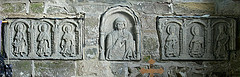
Carvings at Breedon-on-the-Hill
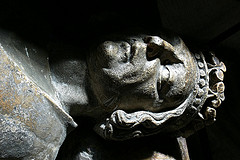
William I Duke of Normandy - Rouen Cathedral.

This tomb of William I Duke of Normandy (d942) in Rouen Cathedral dates from the 14th century. The earlier burial had been in the ancient sanctuary near the end of what is now the nave.